
The 2026 midterms polls are predicting a blue wave. Can they be trusted?

The 2026 midterms polls are predicting a blue wave. Can they be trusted?
After major misses in recent elections, some experts say there’s reason to look at polls predicting a Democratic landslide with a healthy dose of skepticism.
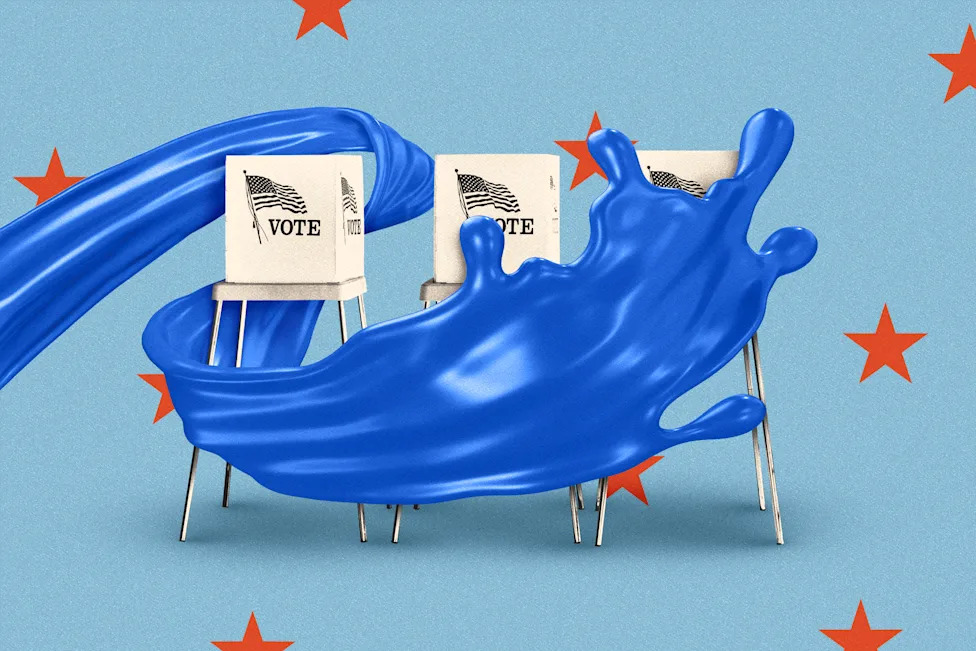
Anyone who’s followed American politics over the past decade or so has learned to look at political polls with a healthy dose of skepticism. Some of the most important recent elections have featured substantial polling errors that left many Americans baffled when things turned out differently than they expected.
As we head into a pivotal midterm election, the polls are generally telling the same story. Forecasts point to the possibility of a blue wave that will sweep across the country, likely allowing Democrats to flip control of the House of Representatives and giving them a chance of gaining a majority in the Senate as well.
Is that story true, though? We won’t know for certain until after the actual votes are counted, but there is evidence that can give us a slightly better sense of what the polls are seeing, what they might be missing and how well other political trends match the picture that the polls are painting.
What the polls say
In a midterm election, there are three types of polls to watch if you want a sense of where things stand in the battle for control of Congress.
The first tracks the approval rating of someone who isn’t even on the ballot in November: the president of the United States. Historically speaking, a president’s party almost always loses seats when voters return to the polls to judge his first two years in office. (The average number lost since World War II? Twenty-six.) Sometimes, the backlash is so pervasive that the president’s party loses seats across a wide range of competitive districts — a phenomenon known as a “wave” election.

Knowing how Americans feel about the president’s job performance is helpful because they tend to channel those feelings into their votes for the U.S. Senate and House of Representatives. Right now, 60% of Americans, on average, disapprove of how President Trump is handling his job, according to the data journalists at Silver Bulletin; 38% approve. That puts the president’s net disapproval rating at about 22 percentage points.
Trump is earning even lower marks on voters’ top issue this year: the cost of living. Shortly after he returned to office, roughly equal numbers of Americans approved and disapproved of how the president was handling inflation. But today — as tariffs and the Iran war help drive prices up — 71% disapprove and 25% approve. That’s a 46-point gap.
The second type of poll to pay attention to is what’s known (at least among politics nerds) as the “generic ballot,” which typically asks something along the lines of: If an election for U.S. Congress were held today, which party’s candidate would you vote for in your district? This is our best measure of how partisan sentiment is shaping up across all 435 U.S. House contests. At the moment, Democrats have a lead on the generic ballot — nearly 9 percentage points, on average — and Republican support has been trending downward since September.
To put that in perspective, Democrats were leading by an average of 7 points on the generic ballot at this point in 2018, with Trump as president and Republican majorities in the House and Senate. Three weeks later, Democrats picked up 41 seats and flipped the House. (This year, Democrats need to net only three seats to win control of that chamber.)
The third and final type of polling that matters in a congressional midterm cycle is state surveys of key Senate contests. Here’s where the data gets a little trickier. In recent weeks, the preponderance of polling has shown Democrats widening their leads in competitive states where they’re defending seats they already hold (Georgia, Minnesota, New Hampshire, Michigan) while also gaining ground in red states where they’re trying to flip a Republican-held seat (Alaska, Iowa, Texas, Kansas, Ohio).
Some Republicans are arguing that this red-state Senate polling could be inaccurate — and pointing to past polling “misses” to make their case.
How badly have polls missed in the past?
It’s important to note that polling errors should be expected in any race. Polling is an inexact science. No matter how sophisticated a pollster’s process is, it invariably includes assumptions, adjustments and extrapolations that leave a lot of room for error. That uncertainty has been a feature of election polling throughout its history.
Those misses are less impactful in years where the variance in polls balances out. If they underestimate the Republicans’ strength in some races while overselling the GOP in others, you end up with polling that generally reflects the actual results in the aggregate.
The problem over the past decade is that, in multiple elections, the polls have mostly missed in the same direction.
Trump’s win over Hillary Clinton in 2016 came as such a surprise because polls had systematically underestimated his support. When it came to the national popular vote, the polls were relatively accurate. The big misses came in the swing states that decided the election. Heading into Election Day, polls showed Clinton ahead — sometimes by a large margin — in five states that Trump ended up winning. The 2016 election sparked a reckoning within the polling world. The major polling firms realized that something had made them underestimate the size of Trump’s voting coalition. They spent years making changes to how they collect and interpret data to fix that clear blind spot.

Donald Trump addresses supporters during a campaign rally in Denver, Colo., on Nov. 5, 2016.
(JASON CONNOLLY via Getty Images)Things looked more promising after the 2018 midterms. The polls were reasonably accurate. When they did miss, they missed in both directions, meaning the polls weren’t systematically biased against either party.
Then came 2020. Even though the polls accurately predicted Joe Biden would win, they underestimated Republicans’ support by even more than they had four years earlier. Trump performed nearly 3 percentage points better than expected in the national popular vote and outperformed polls in individual states by more than 4 points. The miss was even bigger in Senate and gubernatorial races.
The polls bounced back in 2022, when they were more accurate than in any election in recent history, before once again underestimating Republicans in 2024 — though by a smaller margin than in either 2016 or 2020.
The pattern over the past decade has been that polls have tended to be biased against Republicans when Trump is on the ballot and reasonably on point when he’s not. While that could be considered reason for optimism among Democrats, five election cycles is hardly a definitive sample.
Why the polls might be wrong
A lot of explanations have been put forward to try to understand the polling misses in recent presidential elections. The most commonly cited is the belief that MAGA Republicans, due to their general lack of trust in mainstream institutions, are less likely to pick up the phone when a polling firm calls than members of other political groups. That phenomenon, which pollsters call “nonresponse bias,” can skew survey samples and make the share of Republican voters appear smaller than it really is.
“The polling is wrong. … Republicans don’t want to respond to polls anymore,” House Speaker Mike Johnson told Fox News on Tuesday.
Johnson and other Republicans have pointed to some surprising survey results on the Senate side to bolster their argument that polls might be missing GOP voters. That includes Democratic leads and strong showings by independents in Senate races in deep red states like Iowa, Kansas and Nebraska. For those polls to be accurate, voter sentiment would have had to have swung as much as 23 points in Democrats’ direction since the last midterm Senate contests in those states.
One pollster recently described GOP voters’ nonresponse in a poll they conducted in Iowa as a “canary in the cornfields” for a potentially widespread undercounting of Republican support in the state.
Polling firms try to account for nonresponse bias by adjusting their results to give less weight to people from groups who are overrepresented in their samples, but doing so means making a lot of assumptions about the nature of a constantly evolving electorate. It’s possible that the adjustments they’re making this year aren’t enough to accurately reflect voters’ sentiments.
On top of gauging how people will vote, there’s also the challenge of determining who will vote. Polls often include results for “likely” voters — voters who are expected to cast a ballot — but deciding who should fit into that category involves its own assumptions that can be wrong. Earlier this month, the polling firm YouGov released a survey showing Democrats up 16 points nationally with likely voters, a gap that YouGov itself described as “hard-to-believe.”
While the major recent polling errors have been in presidential election years, data compiled by Republican pollster Patrick Ruffini suggests that the polls have also had some noteworthy misses in midterm cycles as well.
“Nationally, the polls were pretty good, but red state polls were too blue and blue state polls too red,” he wrote on X.
If Ruffini’s analysis is accurate, that could mean that Democrats’ chances of flipping Senate seats in states like Texas, Iowa and Ohio aren’t nearly as strong as they appear to be.

Democratic Senate candidate James Talarico of Texas speaks at a rally on July 13, 2026.
(AP Photo/Brenda Bazán)Republicans also have more room for error in the House this year thanks to redistricting. The GOP’s sweeping campaign to redraw congressional maps in red states gave them up to nine new safe House seats. Democrats tried to even the score by doing their own gerrymandering. But when the dust settled, Republicans still came out ahead.
That said, Republicans might still struggle to keep their majority in the House even if the polls are off by a significant margin. On the other hand, when it comes to the Senate, the polls would only need to be off by a few points in a handful of key states for the GOP to maintain control over the chamber.
Why the polls might be right
Polling errors are commonplace; they happen in most elections. But they tend to be random and to change directions from one cycle to another.
The argument that skeptics are making this time around is that there is something fundamentally different about the Trump era — something that systematically skews all poll results involving Trump.
This has been true, to a degree, in each of the three presidential contests that Trump himself has competed in. There, the final average of polls conducted before Election Day underestimated Republicans’ performance in the popular vote by an average of 3.8 percentage points, according to data journalist Nate Silver.
But there has been no systematic polling bias toward Democrats in Trump-era elections when Trump himself was not on the ballot. In fact, the polls since 2016 have overestimated Republican support in midterm elections (by an average of 0.2%) and off-year, special and runoff elections (by an average of 1.3%), according to Silver.
One possible explanation for this dynamic is that “the midterm electorate skews toward politically engaged voters who are more trusting of institutions and more likely to have answered polls,” as the Atlantic recently put it. To be significantly wrong in 2026, the polls would have to be wrong in ways they weren’t in 2022 and 2018.
There are other reasons to believe the polls could be right as well. While there are signs that rural Republicans are not responding to pollsters in certain states, that doesn’t necessarily mean that those voters are secretly planning to show up and surprise everyone on Election Day. Instead, experts say that it might mean the opposite: that they don’t want to answer questions about politics because they are not particularly enthusiastic about voting this year. Pollsters aren’t seeing this “rural nonresponse” effect everywhere, either.

The Hidalgo County Republican Party Headquarters on Sept. 16, 2026, in McAllen, Texas.
(AP Photo/Julia Demaree Nikhinson)The parties are also behaving as if the polls are accurate. Republicans’ spending patterns show that they are “pour[ing] money into dozens of U.S. House races previously considered ‘safe,'” Reuters recently reported. Democrats are also campaigning hard in parts of the country that would typically be out of their reach.
Meanwhile, “some top congressional Republicans have privately concluded that it is likely impossible for them to keep control of the House of Representatives in the midterm elections,” according to Politico.
On the Senate side, the major GOP campaign groups have reportedly cut back on spending in North Carolina and Georgia, a sign that they may be losing faith in winning those races, and rerouted the money to defend a historically safe seat in Kansas.
None of this guarantees that the polls are right. They could be rife with the same errors that have plagued them in recent elections, or have new blind spots that won’t become clear until later. However, the polls currently reflect what you might expect to see in a political environment in which historical precedent suggests the party in power will struggle, the president’s approval rating is low, and the parties are battling it out in what are normally deep red parts of the country.
We’ll find out just how accurate the polls really are on Nov. 3.

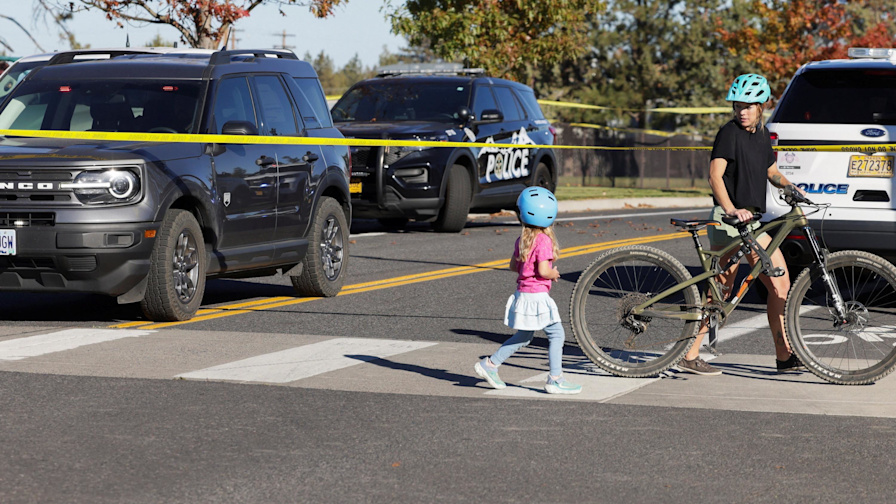
The suspect was shot dead by an armed bystander who followed him into the Oregon school, police said.


A teenager shot and killed three children and a teacher on Thursday at an elementary school in the US state of Oregon, police said, adding the assailant was later killed by an armed bystander who pursued him into the building.”Moments later, an officer reported that the suspect had been shot by a community member who had seen the suspect enter the school and pursued him into the school and engaged him,” Krantz said.


Elon Musk donated $158 million to the super PAC supporting Senate Republicans, with most of that money going to a group that supports GOP Texas Senate Ken Paxton.

One person dialled 999 to report seagulls for stealing ice creams.


Hull City Council said it had made contact with its specialist contractor about repairs needed.


South Kesteven District Council had to re-evaluate the plans under new planning rules.

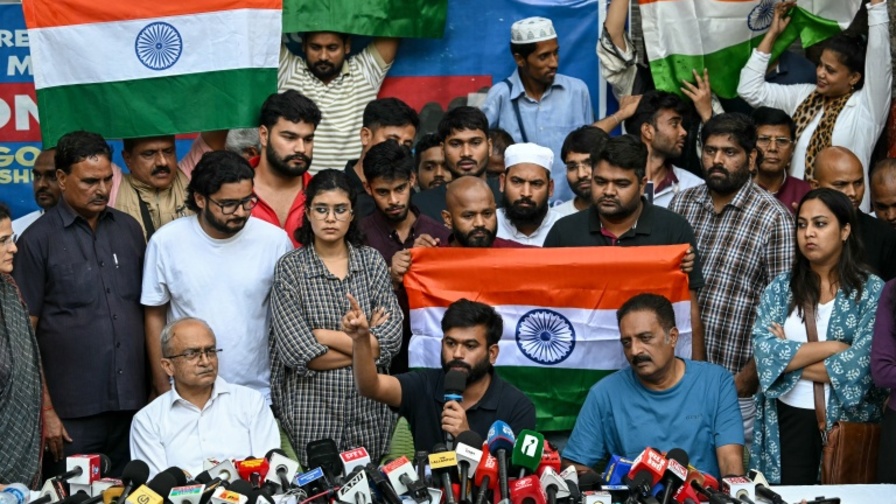
Authorities closed a central New Delhi park Friday before a fresh protest seeking the removal of India’s election chief over a voter-roll revision that critics say has disenfranchised millions.In recent days, the Indian capital has seen street protests over a large-scale voter roll revision exercise overseen by chief election commissioner Gyanesh Kumar.


Refresh for latest… A wind-whipped brushfire ignited in western Malibu today and spread from one to five acres in a matter of about 15 minutes. Within an hour, the incident was estimated at about 35 acres, including various spot fires that erupted as winds pushed the flames forward. As of 9:30 p.m., the fire was …


Maritime drones powered by sun and wind that can stay at sea for months will patrol Fiji’s waters for drug traffickers and other threats under a deal with Australia announced Friday.Australia will provide Fiji with Bluebottle drones and training, under a AU$600 million ($420 million) pledge made to Pacific Island countries last month to tackle organised crime at sea, officials said.


The worst crisis in US-Ukraine relations since last year’s Oval Office meltdown is deteriorating further over a dispute about who ordered a disruption to a critical Ukrainian military system running on Elon Musk’s Starlink internet service.


White House Press Secretary Katie Zacharia, who was appointed less than a week ago, said China lacked “proper toilets” in an interview that aired on Thursday.The press secretary, who previously lived in China, recalled in an interview that the perception in 2016 was that China would soon overtake the United States.

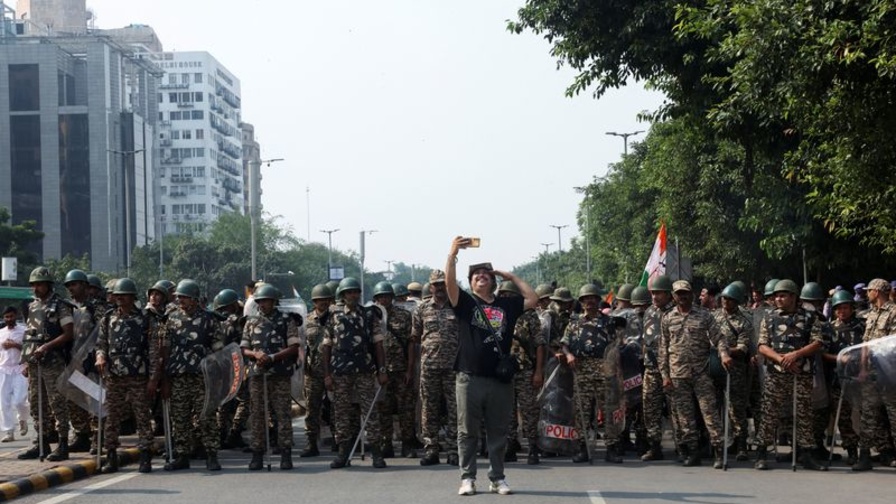
NEW DELHI, Oct 16 (Reuters) – Security was stepped up and police warned of traffic disruptions in the Indian capital Delhi on Friday as the ‘cockroach’ movement called for a rally in the central


Traffic is building up near the Orwell Bridge near Ipswich.

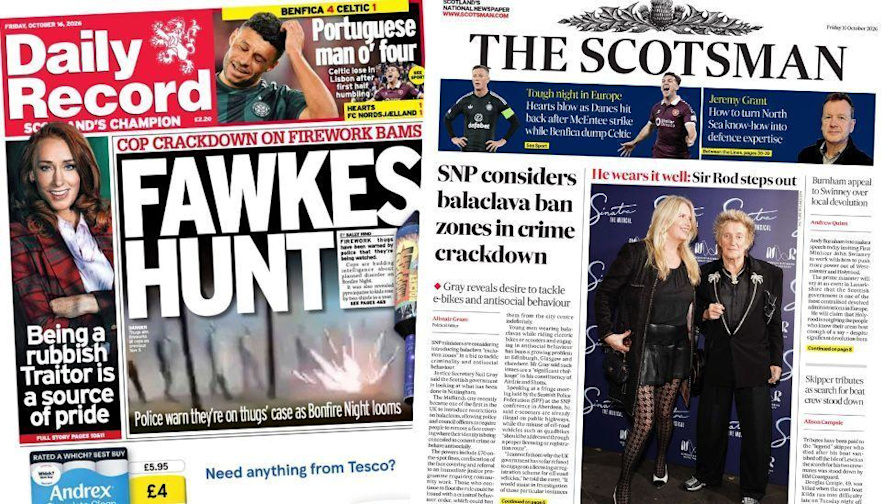
A review of the front page stories from the daily newspapers in Scotland.


Jersey Water says the island’s total water storage currently stands at just 57%.

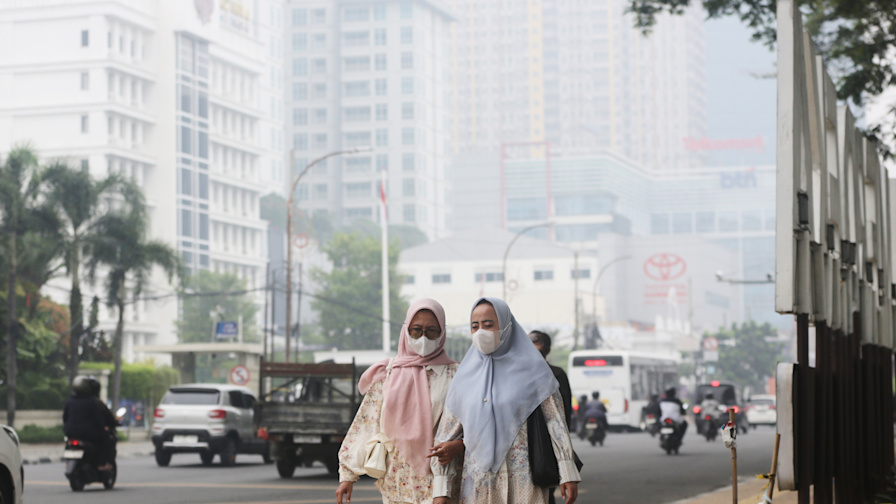
JAKARTA, Indonesia (AP) — Four people died and two others suffered severe burns while battling a wildfire in a national park on Indonesia’s main island of Java, after they became trapped by thick smoke and rapidly spreading flames, officials said Friday.The blaze erupted in recent days in the Mentigen and Pusung Lingker areas of the popular Bromo Tengger Semeru National Park in East Java’s Probolinggo regency.

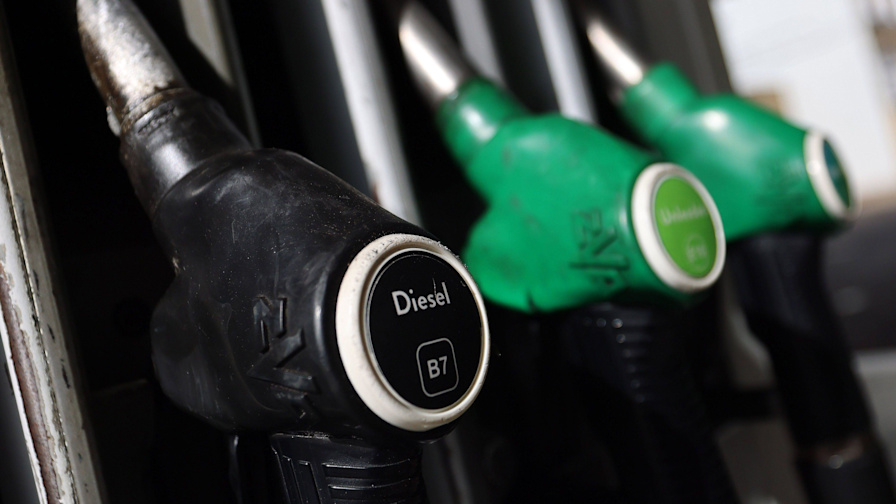
Diesel recently topped £2 per litre and there is concern that a duty freeze will not go far enough.


Three years ago the centre was badly damaged by a tornado during Storm Ciarán.
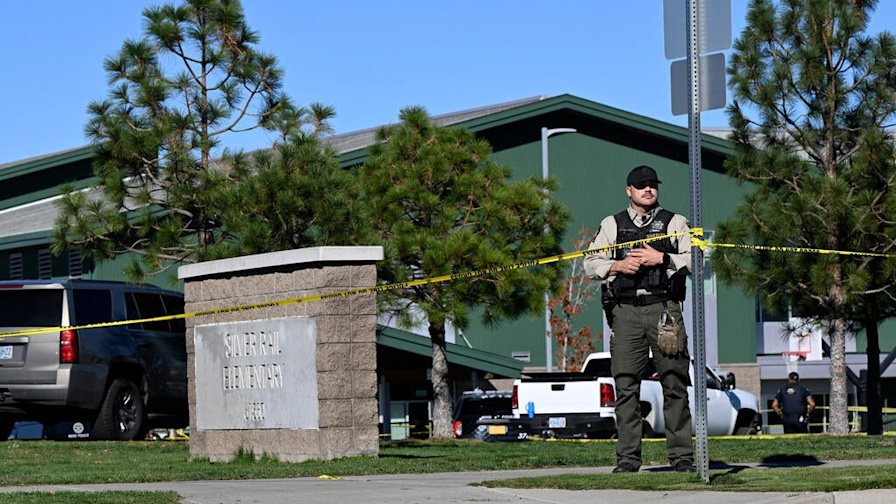
Three children and a teacher were killed, and two others critically wounded, in a shooting at Silver Rail Elementary School in Bend, Oregon. The suspect was shot and killed by a bystander.

Politicians are attempting reductions to the tax on local fuel, amid worldwide price rises.
Powered by WPeMatico