
The 2026 midterms are 2 weeks away. Which party has a better chance of winning? Here’s what the latest polls say.

The 2026 midterms are 2 weeks away. Which party has a better chance of winning? Here’s what the latest polls say.
Trump’s approval rating is going down. Democrats’ lead on the generic ballot is going up. Could this be a “wave” election?

The 2026 midterm elections are just two weeks away. So where do things stand — nationwide — in the race to control Congress? Which party has a better chance of, you know, winning? To get a sense of that, it helps to geek out over some cold, hard data.
The usual caveats apply, of course. Polls aren’t predictions; they’re momentary snapshots of public opinion. Big events can, and often do, change the course of elections.
Yet the stakes in November couldn’t be higher, especially for President Trump, who has enjoyed complete Republican control of Congress for the first half of his second term. Flipping the House would give Democrats the power to block the president’s agenda, investigate his administration and even impeach him (again); flipping the Senate would allow them to stymie his Supreme Court nominees too.
The state-by-state midterm landscape is finally taking shape — and a few clear polling trends are emerging. Here are the numbers to watch as Election Day nears.
The generic congressional ballot
Every pollster asks a version of the same question: If an election for U.S. Congress were held today, which party’s candidate would you vote for in your district? In fact, this particular polling prompt is so pervasive, it’s known as the “generic ballot” (at least among politics nerds).
You obviously can’t divine the outcome of an entire midterm election from a single question that flattens 435 House contests into a binary choice between “the Democrat” and “the Republican.” But the generic ballot can suggest which direction voters are heading.
History is helpful here, courtesy of the RealClear Politics polling average:
-
At this point in 2022 — after more than a year and a half of Democratic President Joe Biden and Democratic majorities in the House and Senate — Republicans had a small but significant lead (2.4 percentage points) on the generic ballot. Two weeks later, the GOP translated its final polling lead of 3 percentage points into nine seats — enough to flip the House.
-
At this point in 2018 — with Trump as president and Republican majorities in the House and Senate — Democrats were leading by an average of 7.7 points on the generic ballot. Two weeks later, they picked up 41 seats and flipped the House.
-
Polarization wasn’t as extreme in 2014 and 2010, the two midterms under Democratic President Barack Obama; minds weren’t made up quite so early. But two weeks out, voters had clearly broken against Democrats. In 2014, a final Republican polling lead of 2.4 points translated into a net gain of 13 seats in the House; in 2010, those numbers were 9.4 points and 63 seats, respectively.
So what does that mean for 2026? Historically speaking, a president’s party almost always loses seats when voters return to the polls to judge his first two years in office. Sometimes, the backlash is so pervasive that the president’s party loses pretty much every close-ish contest — a phenomenon known as a “wave” election.
Right now, Democrats have a wave-sized lead on the generic ballot — about 9 percentage points, on average — and it has been steadily growing over the last month.
Democrats might not reprise 2018 and flip 41 House seats again in November, in part because red-state Republican lawmakers have recently redrawn congressional maps across the South to benefit their party in ways that blue-state Democrats have been unable to keep up with. But they only need to pick up three seats to win back the House.
Advantage? Democrats.
12 specific Senate races
National dynamics tend to define the composition of the incoming House. But Senate contests are quirkier — more state-specific and personality-driven. Democrats currently hold 47 Senate seats; they’d need 51 to control the chamber. (A 50-50 split would give Vice President JD Vance the tiebreaking vote). Polls suggest that flipping four Republican seats is very possible. In the states where Dems are playing defense — Michigan, Georgia, New Hampshire — their leads are solidifying; meanwhile, red states such as Iowa, Kansas, Nebraska and South Carolina seem increasingly competitive. Here are the 12 races to follow:
Maine (Republican seat)
Republican Susan Collins (incumbent)
Democrat Troy Jackson
What the latest polls say: Jackson, who replaced Graham Platner, the Democrats’ previous scandal-plagued nominee, tends to lead Collins by anywhere from 2 to 4 percentage points. One recent poll shows a tie.
Michigan (Democratic seat)
Republican Mike Rogers (former member of Congress)
Democrat Abdul El-Sayed (public-health epidemiologist and former Wayne County, Mich. health director)
What the latest polls say: Twenty polls have been conducted over the last month. Eighteen of them showed El-Sayed in the lead, by anywhere from 1 to 7 percentage points.
Ohio (Republican seat)
Republican Jon Husted (incumbent)
Democrat Sherrod Brown (former senator)
What the latest polls say: All but one poll conducted over the last month shows Brown leading Husted, with margins ranging from 1 to 8 percentage points.
Georgia (Democratic seat)
Democrat Jon Ossoff (incumbent)
Republican Mike Collins (member of Congress)
What the latest polls say: Ossoff holds a solid lead over Collins, with October polls putting him ahead by an average of 8 percentage points.
North Carolina (Republican seat)
Republican Michael Whatley (former Republican National Committee chairman)
Democrat Roy Cooper (former governor)
What the latest polls say: Cooper leads by nearly 10 points, on average. The most recent survey showed him ahead by 14.
New Hampshire (Democratic seat)
Republican John E. Sununu (former U.S. senator)
Democrat Chris Pappas (four-term U.S. representative)
What the latest polls say: Pappas and Sununu were previously trading leads in polls in the race to replace retiring Democratic Sen. Jeanne Shaheen. But Pappas appears to have opened a substantial lead — average margin: 7 percentage points — over the last month.
Alaska (Republican seat)
Republican Dan Sullivan (incumbent)
Democrat Mary Peltola (former member of Congress)
What the latest polls say: Surveys conducted in October show Peltola leading by anywhere from 2 to 7 percentage points. But some September polls showed a tie, or Sullivan slightly ahead.
Iowa (Republican seat)
Republican Ashley Hinson (member of Congress)
Democrat Josh Turek (state legislator and former Paralympic athlete)
What the latest polls say: Hinson and Turek have traded small leads in surveys released since Iowa’s June 2 primaries.
Texas (Republican seat)
Republican Ken Paxton (state attorney general)
Democrat James Talarico (state legislator)
What the latest polls say: Nearly every poll conducted over the summer has shown Talarico leading Paxton, though the margins are small — between 1 and 6 points.
Nebraska (Republican seat)
Republican Pete Ricketts (incumbent and former governor)
Independent Dan Osborn (veteran and former union leader with Democratic support)
What the latest polls say: Surveys are few and far between. But the most recent results suggest Osborn could be competitive.
Kansas (Republican seat)
Republican Roger Marshall (incumbent)
Democrat Adam Hamilton (Methodist pastor who previously considered an independent run)
What the latest polls say: Marshall leads by 1 point in the most recent sounding — but that is the only survey conducted over the last month that shows him ahead. The rest (save one tie) give Hamilton a slight edge (between 1 and 5 percentage points).
South Carolina (Republican seat)
Republican Darline Graham (incumbent, appointed to replace her brother Lindsey Graham after his death in July)
Democrat Annie Andrews (pediatrcian and former U.S. House candidate)
What the latest polls say: Graham holds a narrow lead in recent surveys. But it is small enough — between 1 and 3 percentage points — that Democrats are now targeting South Carolina as well.
Advantage? Democrats. They’ve been consistently gaining ground over the last month, to the point where they are now favored to flip the Senate — unless the polls are wrong.
Trump’s approval rating — especially on affordability
To one degree or another, midterm elections are always referendums on how the president is performing. So Trump is the final piece of the puzzle.
At the moment, that’s unfortunate news for Republicans on Capitol Hill and those looking to join them.
According to the data journalists at Silver Bulletin, 60% of Americans, on average, currently disapprove of how Trump is handling his job vs. 38% who approve. That puts the president’s net disapproval rating at 22%.
Again, history can provide perspective. In mid-September 2018, Trump was about 12 points “underwater”; Republicans went on to lose 41 seats that November.
Trump is earning even lower marks on voters’ top 2026 issue: the cost of living. Shortly after he returned to office, roughly equal numbers of Americans approved and disapproved of how the president was handling inflation. But today, 73% disapprove and 24% approve. That’s a 49-point gap.
In comparison, Biden’s approval rating on inflation was rarely underwater by more than 30 points during his presidency — a period that coincided with the economic shocks of COVID-19 and ended with him choosing not to stand for reelection.
Advantage? Democrats.


Sébastien Lecornu said new curfews for Tuesday night would be decided where necessary.


Indonesian authorities were investigating on Tuesday after a car-sized piece of what a government agency said was a Chinese space rocket crashed into a palm oil plantation near homes and work sites.The Chinese government said last week that a Zhuque-2E rocket had launched 10 satellites into space from a commercial launch site in the country’s northwest.
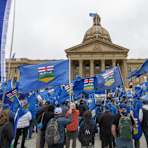
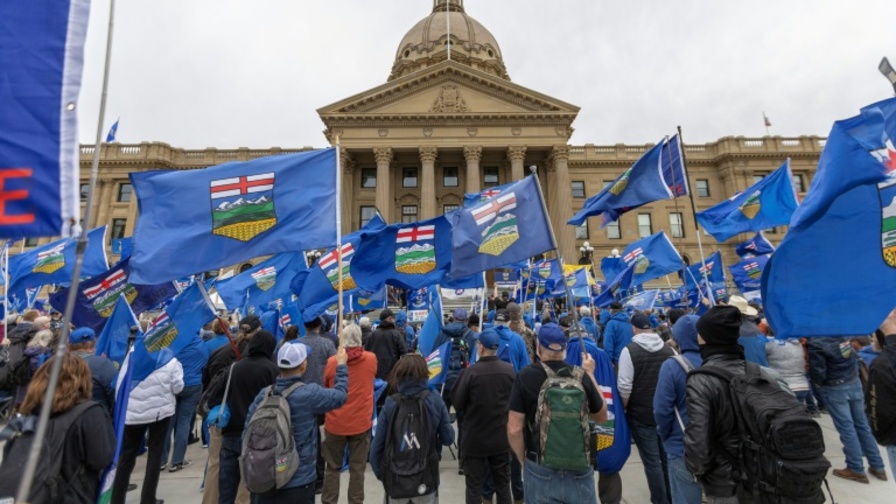
Canada’s province of Alberta rejected a plan to hold a binding independence referendum, results showed Tuesday, a setback for separatists backed by allies of US President Donald Trump.Alberta’s independence push has also drawn sustained interest from Trump allies.


In the wake of the apparent attack on Helen Haines, MPs have described locking their office doors, and scanning every crowd for potential threats.


Helen Haines was hit by a car twice in what the prime minister said appeared to be a “deliberate act”.

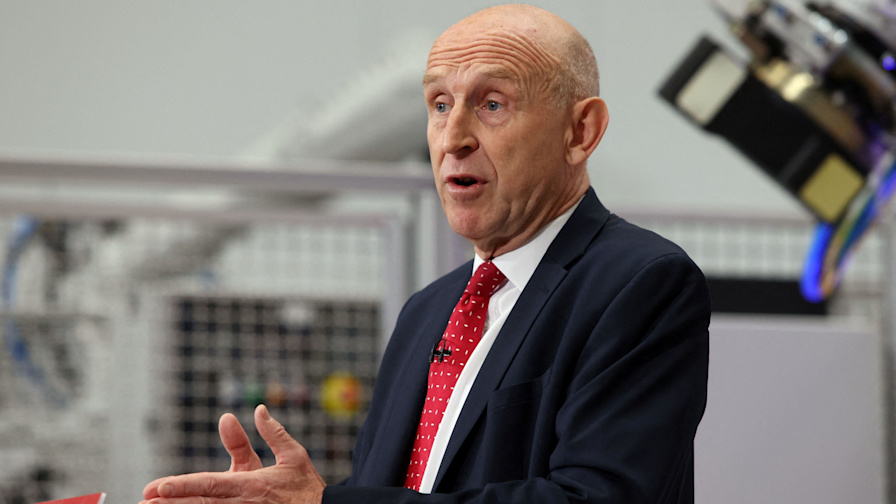
Influential Labour figures had been pushing for equalising CGT and income tax, but critics have said this could drive wealthy people out of Britain.


The crash, which involved a lorry, a van and two cars, occurred in Newry on Monday morning.


France will impose new curfews in areas where needed on Tuesday, Prime Minister Sebastien Lecornu said, adding that the measures introduced in several cities the previous day had “helped keep the night calm”.”Targeted curfews have contributed to calm overnight,” Lecornu wrote on X.
“Tonight new curfews will be decided where the situation requires it.


KUALA LUMPUR, Oct 20 (Reuters) – Malaysia cancelled the registration of the country’s main opposition coalition Perikatan Nasional (PN) on Tuesday amid a dispute between its key parties, dealing a

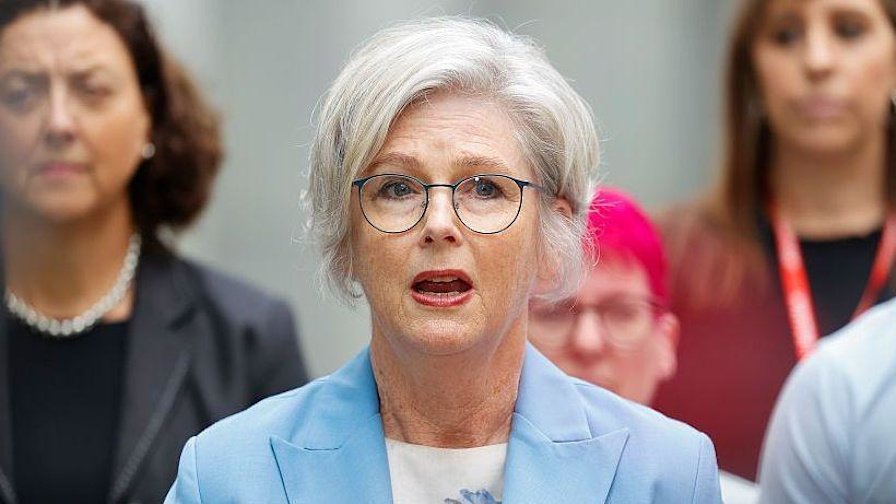
Helen Haines remains in a critical but stable condition and has reportedly lost a leg. The suspect has been named in local media as an environmental campaigner.


By Liz Lee and Ben Blanchard BEIJING/TAIPEI, Oct 20 (Reuters) – China’s military said on Tuesday it had sent forces to watch a US warship that “illegally” entered waters around a disputed shoal in the


South Korea’s foreign ministry said Tuesday it will withdraw some staff from its embassy in Ukraine, as a diplomatic row deepens over the transfer of North Korean prisoners of war to Seoul.Seoul’s spy agency said that Zelensky may have disclosed the transfer of the North Korean soldiers to boost public support in South Korea for Seoul providing arms to Ukraine.


BEIJING/HONG KONG, Oct 20 (Reuters) – A photo of a home-cooked lunch almost exposed Coco Li’s secret.


As votes continue to be counted, Mark Carney says that the projected results show the country will “move forward together”.


The library will relocate from Queens Road to Mercury House in November.


CALGARY, Oct 19 (Reuters) – Alberta residents voted to remain part of Canada in the province’s first-ever referendum on separation, in a much-needed win for Prime Minister Mark Carney as he attempts to unify the country amid a trade war with the US. CBC News, Canada’s government-funded national broadcaster, called the result late Monday after 33% of the vote had been counted.

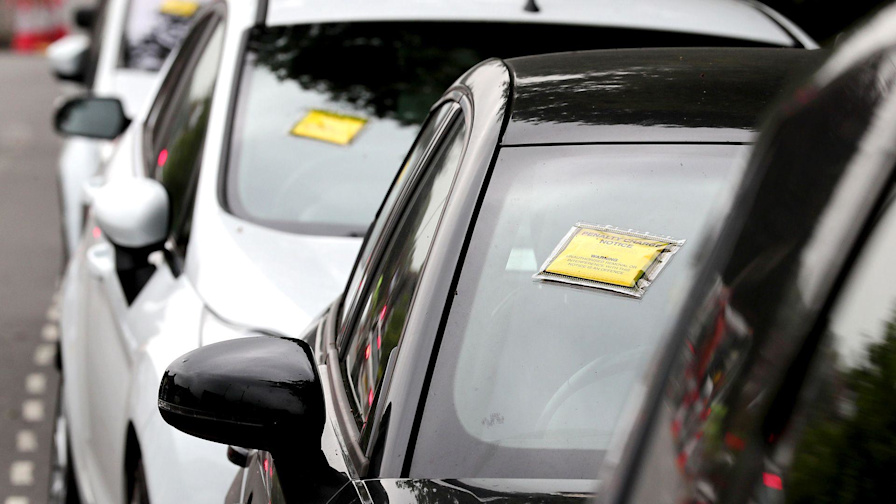
Penalties are seen as too harsh on motorists who are penalised for parking on private land.


Meetings in Barnsley and Durham are for anyone with a connection to the 1984 Battle of Orgreave.


South Korea’s foreign ministry said Tuesday it will withdraw some staff from its embassy in Ukraine, as a diplomatic row deepens over the transfer of North Korean prisoners of war to Seoul.The announcement came more than a week after South Korea’s ambassador to Ukraine returned home following President Volodymyr Zelensky’s disclosure of the prisoner transfer last month, which Seoul said put their families in North Korea at risk.
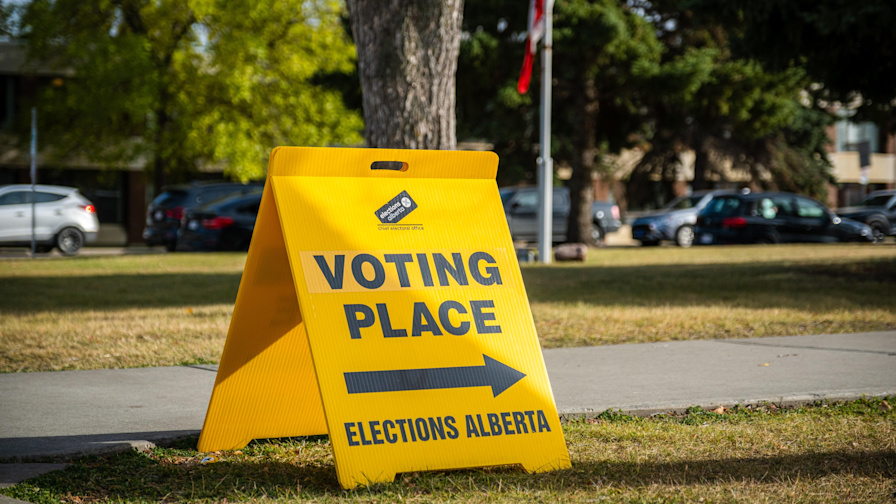
The vote was not a referendum on independence from Canada, but it would have begun a process towards possible separation.
Powered by WPeMatico