
Judge denies feds’ request to block 20,000 California ballots in blistering opinion
Judge denies feds’ request to block 20,000 California ballots in blistering opinion
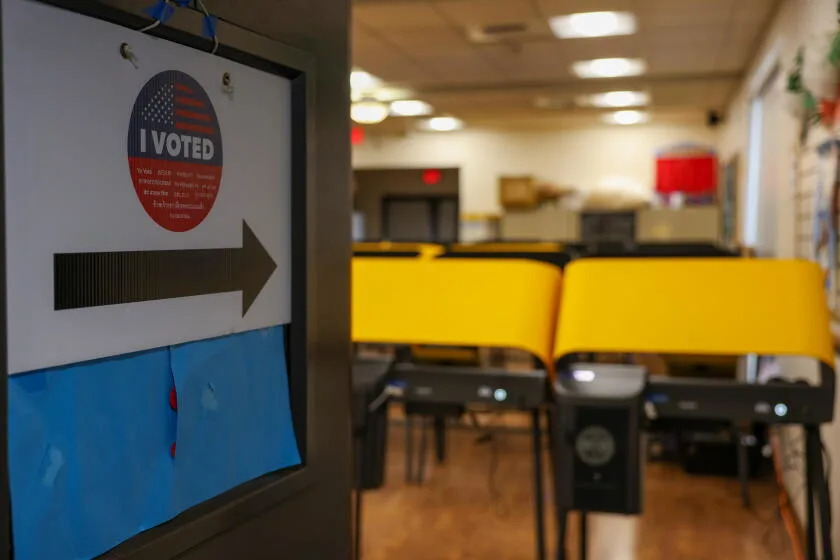
A federal judge in a blistering opinion Wednesday denied a Trump administration request to immediately block California elections officials from counting the ballots of 20,000 voters whose citizenship the administration questions. The administration swiftly said it would appeal.
U.S. District Judge David O. Carter ruled that the administration’s allegations were “not credible” and that the intervention it sought would violate a host of federal laws, sow chaos in the ongoing midterm election, likely lead to the disenfranchisement of legitimate voters and foster future political meddling in elections.
“This request violates longstanding constitutional principles mandating that states have control over their elections,” Carter wrote. “If [the Trump administration’s] last-minute request for relief were granted, either party could create chaos for their own political purposes to disrupt the election process.”
Carter, an appointee of President Clinton, wrote that never in American history “has the federal government, on the eve of an election, sought to coerce a state and local government to abandon their own Constitutional elections procedures and bend to the will of the Executive Branch,” and that, in bringing its suit, the Trump administration was asking the court to “believe that it reigns as a sole sovereign.”
“But California and its people are sovereign, too,” Carter wrote.
Carter’s ruling was the second to deny the Trump administration a temporary restraining order against the state and Los Angeles County this week, after a three-judge panel of the U.S. 9th Circuit Court of Appeals denied the government’s emergency request in a separate order Monday.
Carter ruled after a 3½-hour hearing Tuesday, where a slew of attorneys for the state, county and independent voting rights groups argued against the administration’s demands.
Read more: Your last-minute voter guide to California’s 2026 general election
First Assistant U.S. Atty. Bill Essayli — who is the top federal prosecutor in L.A. and argued for the Trump administration at Tuesday’s hearing — wrote on X that his office had already filed notice of appeal and “will immediately seek an emergency order” reversing Carter back in the 9th Circuit.
“Every day, more ballots are processed by election officials. This ongoing emergency disenfranchises American citizens through dilution,” Essayli wrote.
State elections officials, other state leaders, voting rights advocates and election experts all cheered the ruling.
“For the second day this week, our country’s legal system is standing up to the President’s authoritarian attempts to remain in power unchecked and unchallenged,” Gov. Gavin Newsom said.
“Today’s ruling is yet another important victory for the rule of law and the right to vote,” said California Atty. Gen. Rob Bonta. “But this fight is not over. We will keep fighting to protect California’s elections from unlawful federal interference and get this baseless lawsuit dismissed.”
Los Angeles County Registrar-Recorder/County Clerk Dean Logan, whom the Trump administration sued along with the state and Secretary of State Shirley Weber, said the ruling “reinforces what we have maintained throughout this process: election integrity and the protection of eligible voters go hand in hand.”
Anna Baldwin, the director of voting rights litigation at Campaign Legal Center who argued before Carter on behalf of the NAACP and the League of United Latin American Citizens, said Carter had “affirmed what the Constitution has already made clear: The states and Congress oversee our elections, not the White House and not the Department of Justice.”
Read more: Read the ballot ruling
Rick Hasen, director of the Safeguarding Democracy Project at UCLA School of Law, said Carter’s ruling was as sweeping a rejection of the Trump administration’s illegitimate attempts to interfere in California’s election as could possibly be written.
“The federal government lost in every way it could possibly lose. It lost on the law, and it lost on the facts, and it lost on the equities — [or] weighing the harms to the various parties,” Hasen said.
And that is appropriate given that the case was a “total overreach of federal power,” Hasen said. “The Constitution’s clear that states have the authority to run Congressional elections unless Congress passes a statute otherwise — and Congress didn’t do so here.”
The Trump administration sued California, Weber and Logan on Oct. 15 — three months after Homeland Security Secretary Markwayne Mullin wrote a letter to Weber alleging that there may be more than 190,000 noncitizens registered to vote in California, and two days after acting Deputy Atty. Gen. Trent McCotter wrote again to Weber and Logan, giving them 48 hours to set aside the ballots for the 20,000 voters on the latest list.
Much of the debate since has centered on the origins and evidence in support of that list.
California and L.A. County officials have said the list appears to be inaccurate, with Logan’s office saying its review of a subset of about 200 voters found that a substantial portion appeared to have been born in the U.S. — a claim that has been disputed by Homeland Security officials.
Elections officials from several other California counties have also raised concerns about the accuracy of smaller lists of voters derived from the 20,000 that were sent to them by Justice Department officials last week, along with a warning that they could face criminal penalties if they tabulate those votes. Officials have said the lists they received contained the names of individuals who did not appear to live in their counties or did not appear to be registered.
State officials have pointed to similar lists being rejected as inaccurate elsewhere, including in Nevada. And during Tuesday’s hearing, multiple attorneys for voter advocacy groups — including the NAACP and Mi Familia en Acción — challenged both the origins and the reliability of the Trump administration’s data, and questioned why the Trump administration has so far refused to disclose when and from whom it obtained the purchased California voter roll data it says its analysis is based on.
State and county officials have said that complying with the Trump administration’s demands would badly disrupt the election and could disenfranchise legitimate voters who are wrongly included on its inaccurate list.
Justice Department officials have defended the list, saying it is composed of 20,000 individuals whom the administration has “high confidence” are not citizens, and that that number represents the “floor” to the issue — while the earlier, 190,000-strong list was the “ceiling” and also included people the administration had suspected but had less confidence were noncitizens.
They argued that Carter should immediately bar the state and county from tabulating ballots from the flagged voters until they can prove those voters are citizens — in part because, as soon as cast ballots are received in person or removed from their envelopes, they cannot be resegregated.
Essayli has said federal authorities have “overwhelming evidence” to support their claims. At Tuesday’s hearing, he said once federal authorities obtained the purchased voter registration records from the state, they “had to enrich or enhance or add, supplement, information to the voter file, so they took the info that was on there — names, addresses — and they used a database that’s often used by law enforcement, it’s used commercially.”
However, in sworn court filings, other administration officials have acknowledged “discrepancies” with some of the records and noted that more recent reviews of the data did show some people on the list appear to have citizenship claims. Essayli told Carter, “We’re never going to stand here and tell you that everything is 100%.”
In his ruling Wednesday, Carter also focused in part on the reliability of the list, noting that the process by which the Trump administration compiled it, and the reliability of outside databases to build it, remained unclear and could not be determined to be reliable based on the record before the court — particularly given that administration lists elsewhere have been shown to be unreliable.
But Carter also touched on several other weaknesses he saw in the Trump administration’s case — weaknesses that were also hit on by the 9th Circuit panel that rejected the administration’s request Monday.
Among them, Carter found that the request violates federal law precluding altering of election rules on the eve of an election.
Read more: Judge in L.A. weighs feds’ request to block 20,000 California votes with skepticism
Carter wrote that prosecutors like Essayli can prosecute individuals who illegally vote — which he called a “clear remedy” to the administration’s concerns about illegal voters casting ballots — but that the administration’s demands to force the state and county to set aside 20,000 ballots at once “would wreak havoc and disrupt the election that is already underway, create a chilling effect on election workers and voters alike, and discount the votes of United States citizens.”
“The Executive Branch cannot replace the remedy Congress carefully enacted with its own unlawful and unconstitutional solution instead,” Carter wrote.
“Eroded trust in our democracy is irreparable. Once a vote is segregated, lasting harm has occurred. If the Executive can discount votes and threaten an ongoing election due to unproven allegations, then our democracy is in danger,” he wrote. “This Court declines to be a party to such process.”
Carter also denounced the Justice Department’s letters to county elections officials threatening them with criminal penalties if they don’t comply with its demands to set the ballots aside — writing that “these threats must stop.”
An appeal, if one is filed by the Trump administration, would face a “tough road ahead,” Hasen said.
While not guaranteed, the appeal is likely to be taken back up by the same three-judge appellate panel who previously heard — and rejected — the administration’s emergency request to block state officials from counting the ballots.
That panel — composed of two appointees of President Trump and one of President Biden — denied the previous request narrowly, ruling 2 to 1 that it did not have jurisdiction over the matter because Carter had not had a chance to rule in the lower court. However, both judges in the majority — Mark J. Bennett, one of the Trump appointees, and Judge Gabriel P. Sanchez, the Biden appointee — wrote separately from the court decision to make clear that they would have denied the administration’s request on the merits too.
Among other things, they wrote that the U.S. Constitution gives power over elections to the states and Congress, not the executive branch, and that federal law precludes such voting probes so close to an election.
Get the L.A. Times California Politics newsletter. Deeply reported insights into legislation, politics and policy from Sacramento, Washington and beyond, in your inbox twice per week.
This story originally appeared in Los Angeles Times.

Political leaders are told to “explain to residents how they will fix this ongoing saga”.


Ivorian reggae star Alpha Blondy abruptly interrupted his concert’s chilled-out vibes to wade into a far less laid-back subject — the coups in his country’s unrest-riven Sahel neighbours.
– ‘Rasta Bambi’ –
Blondy’s fellow Ivorian reggae singer Tiken Jah Fakoly also found himself mired in the squabble after criticising the clampdown on free speech in Ivory Coast’s neighbours.

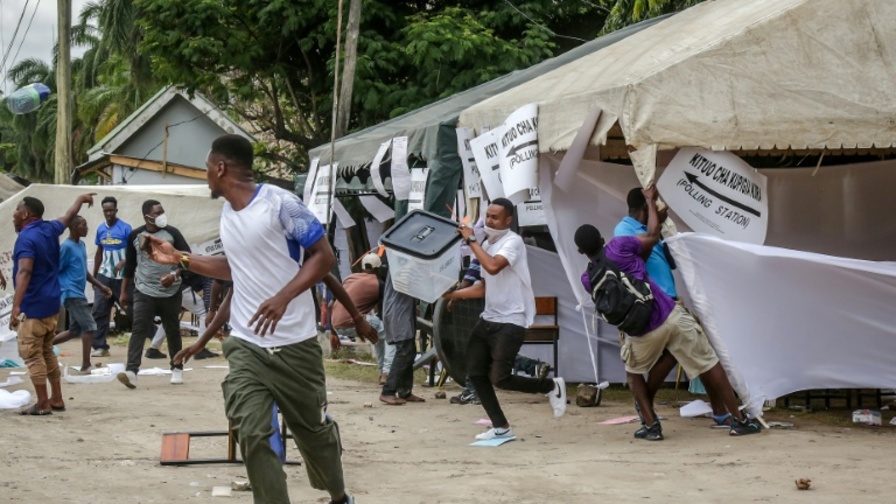
A year after Tanzania’s bloody election, many remain traumatised by the violence, while government critics live in fear of abduction and arbitrary arrest, or facing treason and terrorism charges.Over the past week, senior opposition official John Pambalu was charged with treason, while a Tanzanian dissident, Twaha Mwaipaya, was abducted in Kenya and remains missing.

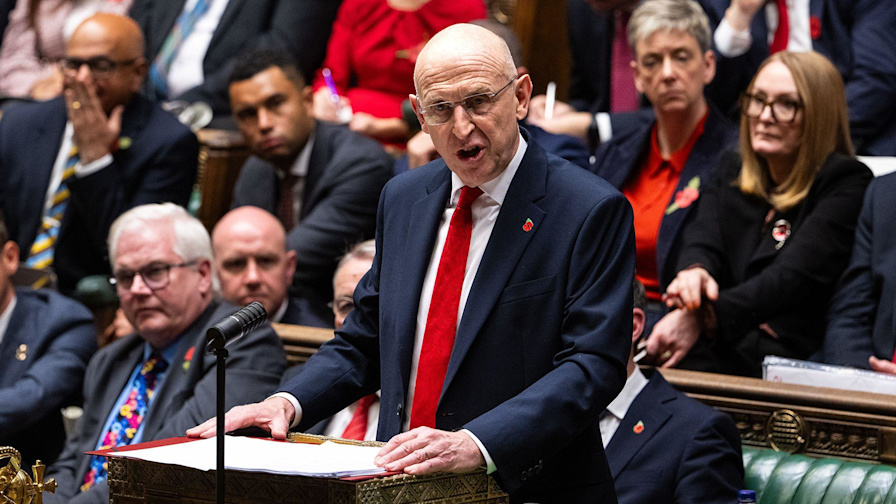
John Healey says it is “simply not good for Britain or progressive to have a bigger and bigger benefits bill”, after the Conservatives accused Labour of being “addicted to welfare”.


North Korea fired “around a dozen” short-range ballistic missiles off its east coast on Thursday, Seoul’s defence ministry said, less than a week after South Korea proposed talks over a growing border row.South Korea’s Joint Chiefs of Staff (JCS) said its military detected “around a dozen short-range ballistic missiles fired from the Wonsan area of North Korea towards the East Sea”, the body of water also known as the Sea of Japan.


As one nursery provider closes, the government says it wants to help support staff training


The government is bankrolling the fund that pays for pensions and other benefits with reserve cash.

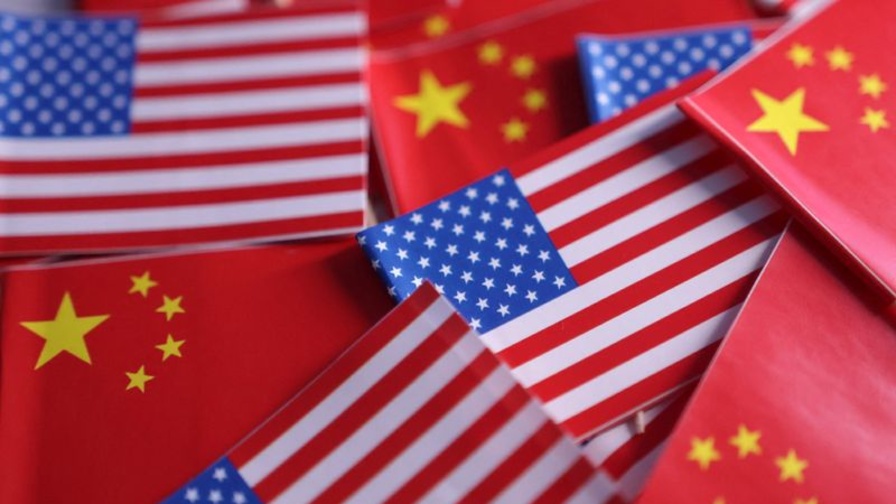
BEIJING, Oct 29 () – China’s commerce ministry on Thursday condemned the United States for placing several Chinese companies on a list of businesses Washington alleges use Uyghur forced labour or source material from Xinjiang, and said Beijing would take steps to safeguard its interests. The US added three Chinese medical equipment makers to the Uyghur Forced Labor Prevention Act Entity List, which includes entities that the US says use or facilitate the use of forced labour of Uyghurs and ot

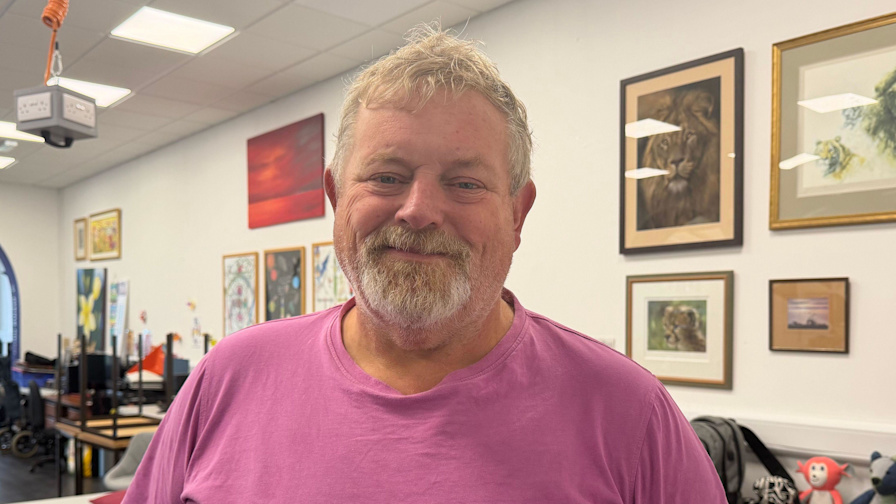
Andrew Ingrouille says a support group provided a “lifeline” for his wife who suffered a stroke.


Iran’s foreign minister said on social media Wednesday the country was in contact with mediators to review proposals to end the war.


Opium poppy cultivation in Afghanistan more than quadrupled in 2026 despite a Taliban government ban, the United Nations said Thursday, urging that impoverished farmers needed alternatives to the lucrative crop.The Taliban government acknowledged that the ban was not a “sustainable and long-term solution” without alternative livelihoods and economic support for farmers.


A force says officers will be more visible as nights draw in and seasonal events make towns busier.


The Committee for Housing is asking for an extra £795,000 to improve the situation for tenants.


Treated vegetable oil is being used as an alternative to kerosene to heat facilities used by crews.


“These birds would have suffered horribly as a result of this attack,” a wildlife inspector says.

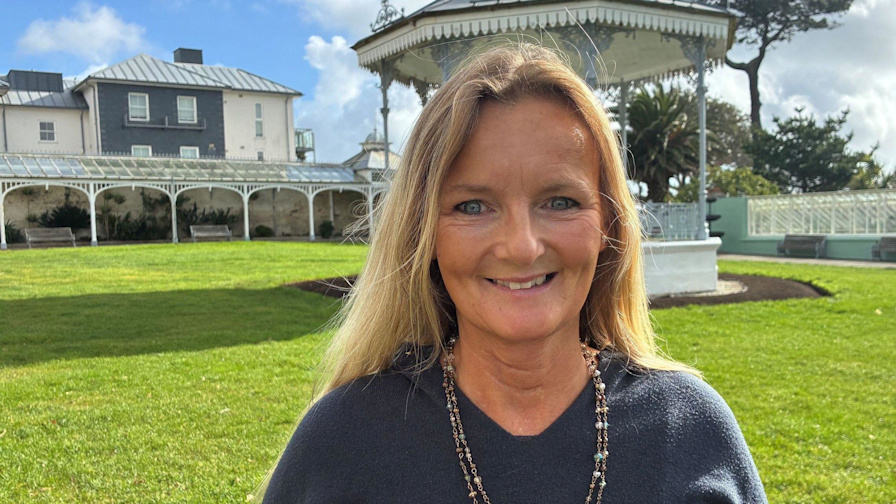
South West Ambulance Service says immediate action is vital for better patient outcomes.

A report alleged that people aligned with Democrat Mary Peltola’s campaign helped recruit a candidate with the same first and last name as Republican Sen. Dan Sullivan. Peltola denied the allegations.


Crews are complimented for their work following the arrival of the damaged MV Ruby in 2024.

Veterans and service personnel can self-refer to the protocol, or friends and family members can.


People in Bilston react to the new Budget set out by Chancellor John Healey.
Powered by WPeMatico