
‘A f***-up of epic proportions’: Blame game begins after Iran-backed Houthis’ lightning advance down Red Sea coast


‘A f***-up of epic proportions’: Blame game begins after Iran-backed Houthis’ lightning advance down Red Sea coast
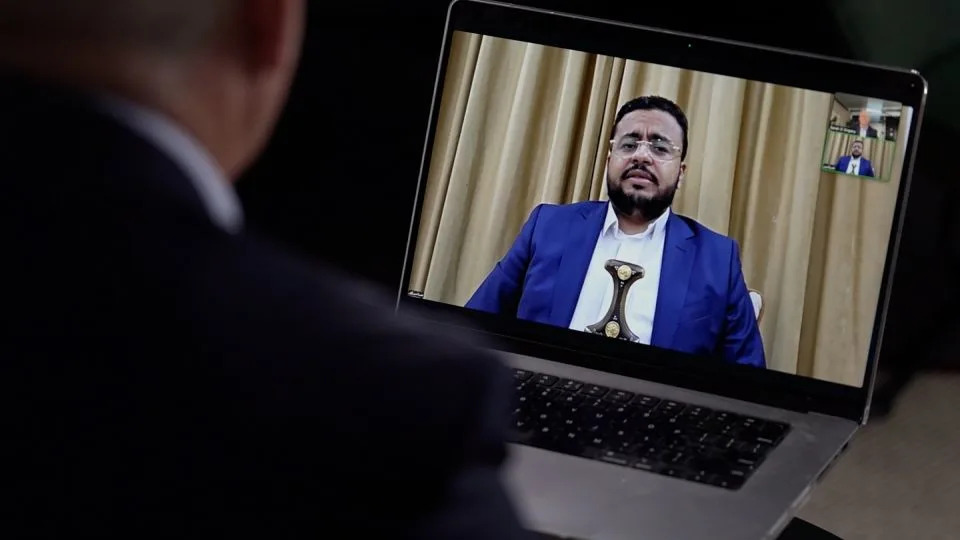
The desperate pleas for air cover from Yemeni generals started coming mid-morning on Thursday. An advance by the Iran-backed Houthis toward Yemen’s strategic port city of Mocha was in full swing, and backup support from chief ally Saudi Arabia was nowhere in sight.
“The Houthis committed everything they had – waves upon waves of fighters … along with their available ballistic missiles and weapons,” a senior Yemeni source attached to their military forces told CNN. The source said he contacted the United States Central Command (CENTCOM) and was assured the US was “watching the situation closely and that Saudi air support was coming.”
“But the air support never came,” the source said. “And Mocha has now fallen.”
Hours later, on Friday, the Houthis captured another key coastal asset, Perim Island, at the mouth of the Red Sea. The island splits the Bab al-Mandeb Strait in two, giving Tehran de facto control over another key shipping route.
The Houthis’ rapid advance amounts to an extraordinary 36 hours in a conflict that had been largely on ice for years. But the kindling for renewed fighting had been laid for months amid the conflict between the United States and Iran, as Tehran seeks to use oil prices – and their impact on the global economy – as leverage.
Now, Yemen and the Red Sea have the potential to become a true second front in the Iran war.
Iran’s effective control of the Strait of Hormuz plus its tightening grip on the Bab al-Mandeb Strait threatens to push oil prices even higher, weeks before November’s midterm elections in the United States.
While the Bab al-Mandeb Strait, the gateway to the Suez Canal shipping route, is less critical to global energy markets than Hormuz, it still carries essential goods worldwide, including millions of barrels of oil every day. The strait has become increasingly important since the start of the Iran war, as Saudi Arabia has re-routed some exports through the waterway to bypass Hormuz.
“(The Houthis) don’t need to use advanced weapons to close Bab al-Mandeb. They can just use a cannon on a car,” said Amr Al-Bidh, the top official of Yemen’s Southern Transitional Council (STC). The STC has fought both the Houthis and Saudi-backed forces in the past, and wants an independent state in the south.
“It’s a leverage that they have without using advanced weapons,” Al-Bidh told CNN in an interview. “And they will keep it.”
‘Ghost’ army rosters and no backup support
Saudi Crown Prince Mohammed bin Salman spoke twice on Thursday with US President Donald Trump and urged him to strike the Houthis, another source familiar with the matter told CNN Friday. Trump declined to intervene, according to that source.
“The United States is focused on protecting our core national security interests—such as ensuring freedom of navigation in the Red Sea—while empowering our regional partners to take the lead in managing and resolving regional security challenges,” the White House said in response to CNN’s questions about the calls. “We are in continuous dialogue with Saudi Arabia and the Republic of Yemen Government regarding regional stability.”
CNN has also reached out to the Saudi Embassy in Washington for comment.
The swift fall of Mocha and the lack of resistance have led to finger-pointing and recriminations among US allies.
“The failure this time is not with the Yemenis,” a regional source told CNN on Thursday. “It’s a disaster made in (Washington) DC and Riyadh.
The regional source told CNN that it was “a complete failure of political leadership” amid fierce squabbling and delayed decision-making in Riyadh.
“There was not one air strike throughout the day yesterday (by Saudi support forces), although there were minute-by-minute updates,” the regional source added. “It’s a Saudi-American f**k up of epic proportions.”
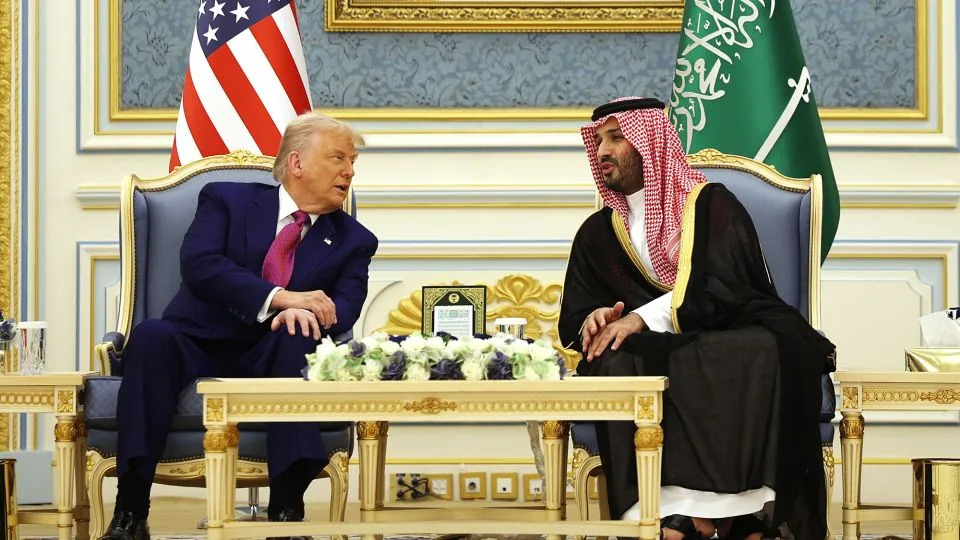
US President Donald Trump met with Saudi Crown Prince Mohammed bin Salman in Riyadh on May 13, 2025, during the president’s multi-nation tour of the Gulf. – Win McNamee/Getty Images
Not everyone agrees. Mohammed al-Basha, who has served as an adviser to the US government and private sector on risks emerging from the Arabian Peninsula, argues that blame also rests with Yemeni leaders, whose internal divisions jeopardized their defenses.
“This goes back to a deeper problem in the anti-Houthi coalition,” the DC-based adviser told CNN. “There is no political cohesion.”
“I think everybody was aware of the Houthis’ push towards the west coast. The writings on the wall were very clear,” he added. “There’s no united command and control in Yemen.”
Houthi fighters arrived in Mocha on Thursday to find Yemeni battalions that were severely depleted – their rosters were filled with “ghost names” receiving salaries, and the actual strength of the army was only about 20% of what it was on paper, a Western source with knowledge of the operations told CNN.
That was compounded by the fact that the United Arab Emirates – once a member of the Saudi-led coalition in Yemen – withdrew its remaining forces from the country in January, after Saudi Arabia called for them to leave amid a dispute. And Saudi Arabia did not backfill those troop barracks and bases.
“It doesn’t make sense. I mean, you have the main backer of the militaries on the ground … who are really doing all of this work for 10 years, and suddenly you ask them to leave, and you don’t fill that vacuum,” Al-Bidh of Yemen’s Southern Transitional Council added. “It’s just lack of strategy and poor management.”
The senior Yemeni official told CNN on Friday that he had “warned CENTCOM repeatedly over the past few days, including yesterday, that the situation was becoming critical.” CNN has reached out to CENTCOM for response.
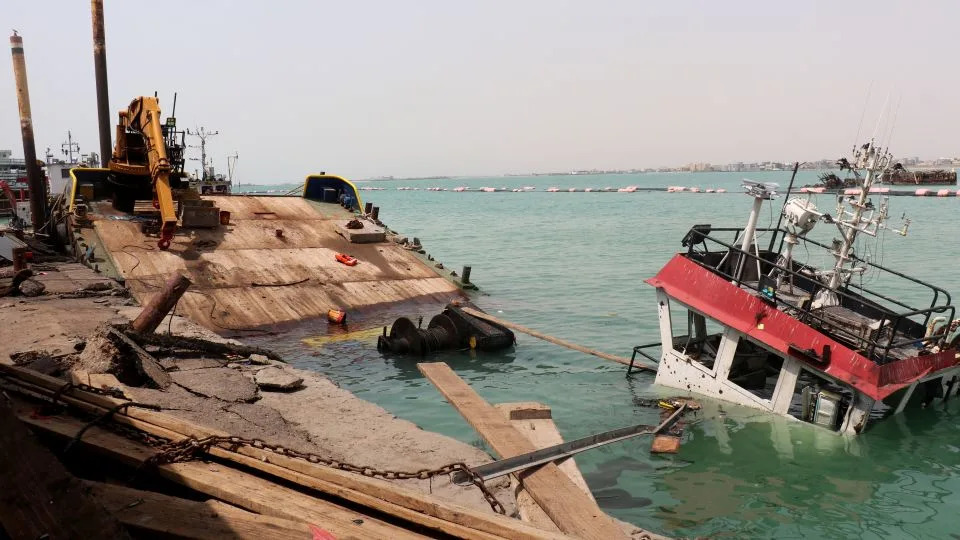
A sunken vessel is seen at the surface of the water in the port of Mocha the day after an attack by the Houthis on August 9, 2026. Strikes by the Iran-backed Houthi rebels have been happening on Yemen’s west coast for weeks. – Khaled Ziad/AFP/Getty Images
CENTCOM chief Adm. Brad Cooper was in Saudi Arabia on Thursday for coordination meetings, two sources familiar said. CENTCOM declined to comment, citing operational security reasons.
The Saudi military had been put on high alert three weeks ago, sources told CNN, but they didn’t move key air command personnel into place. The Western source with knowledge of the battle said that Saudi Arabia never deployed the necessary service personnel to control and direct combat aircraft in the event of a serious attack.
“The Saudis threw the Yemenis under the bus,” the Western source told CNN on Thursday.
CNN has reached out to the Saudi Arabian information ministry for comment on those allegations.
The failure to defend Mocha and Perim is even more confounding in light of the recent news – reported exclusively by CNN – that more than 100 US military advisers were sent to Saudi Arabia providing intelligence and targeting support to the Kingdom in its military campaign, according to five sources familiar with the operations.
The US military personnel are working as part of a newly established joint forces command, which was formed in recent weeks amid signs Iran was ramping up its own efforts to aid Houthi attacks, said one of the sources, a US official. That official estimated the total number of US personnel in Saudia Arabia at roughly 200 troops.
The capture of the Red Sea assets gives the Houthis far greater maneuverability and leverage, as it opens up new locations from which the Iran-backed rebels can launch boats and attacks.
Asked what comes next, al-Basha, the risk analyst, told CNN: “I think the Houthis are going to be moving east. We are seeing today, via satellite and via OSINT (open-source intelligence) photography… that the Houthis are mobilizing.”
An adviser to Iran’s supreme leader on Friday described the Houthi advance on the west coast of Yemen as a “clear victory,” writing in a post on X that “the American people and Washington’s allies are paying the price for the economic crisis and Trump’s ambitions.”
CNN’s Sarah El Sirgany, Mostafa Salem, Nadeen Ebrahim, Jennifer Hansler, Zachary Cohen, Katie Bo Lillis and Kylie Atwood contributed to this report.
For more CNN news and newsletters create an account at CNN.com

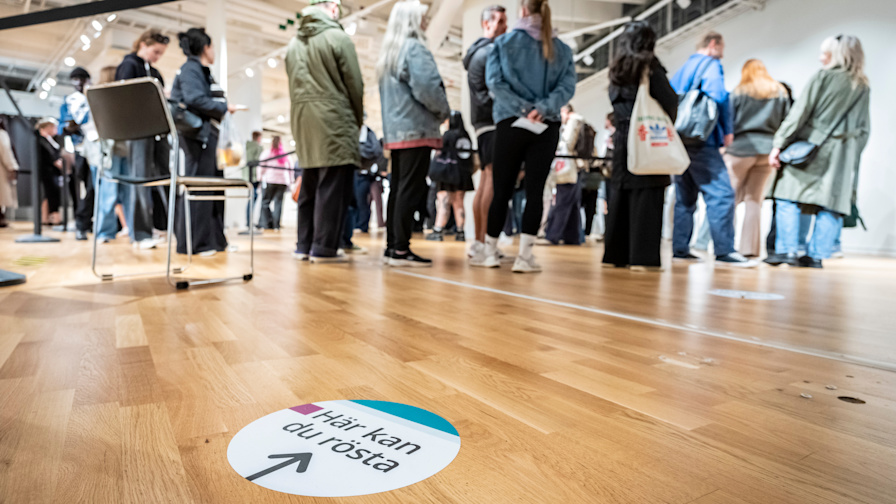
Voters in Sweden will head to the polls on Sunday for an election that will determine whether a conservative leader remains in charge and a hard-right party wins ministerial jobs for the first time, or whether the center-left returns to power. Prime Minister Ulf Kristersson is seeking a second four-year term at the helm of the European Union nation that is also NATO’s newest member. Experts say the campaign has been fragmented and incoherent, with policy questions such as how healthcare should be organized drowned out by questions about which parties will be able to put together a government.
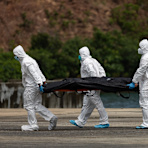

By Adrian Portugal and Eloisa Lopez CORON, Phliippines, Sept 13 (Reuters) – Authorities in the Philippines said on Sunday it could take weeks or months to identify the victims of a ferry fire that


For 50 years Johnny Rafferty fought for workers’ rights and the unemployed in Maryport.
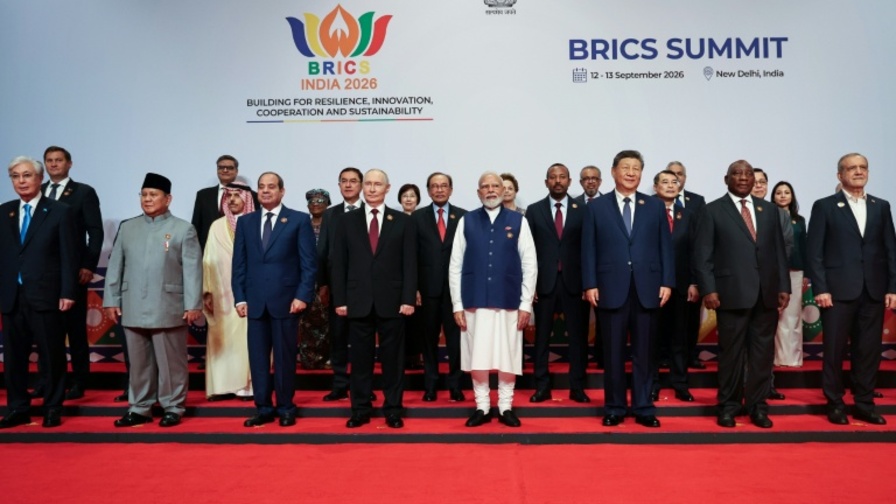
BRICS leaders including China, Russia and India entered a second day of talks in New Delhi on Sunday, discussing “inclusive global growth”, after reaching rare agreement calling for calm in the Middle East.”The power of BRICS lies in our diversity and cooperation,” Modi told leaders, including Chinese President Xi Jinping and Russian President Vladimir Putin, on the final day of talks.
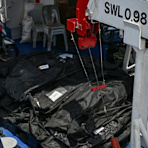

The bodies of 41 victims of the worst Philippine ferry disaster in over a decade made their way through the blue waters of a resort area on Sunday, bound for a dock where forensic investigators awaited them.- ‘Weeks or months’ –
AFP journalists came within a nautical mile of the grounded ferry on Sunday before stopping due to the shallow waters, transferring to a smaller boat that contained body bags holding the 41 recovered victims.


It comes as the AI firm’s boss has called for the technology’s development to be slowed down, citing “serious” risks.
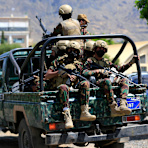

The moves by the Houthis make it easier for the Iran-backed rebels to target ships transiting the crucial Bab el-Mandeb Strait for Saudi Arabian oil exports.
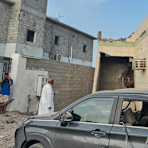
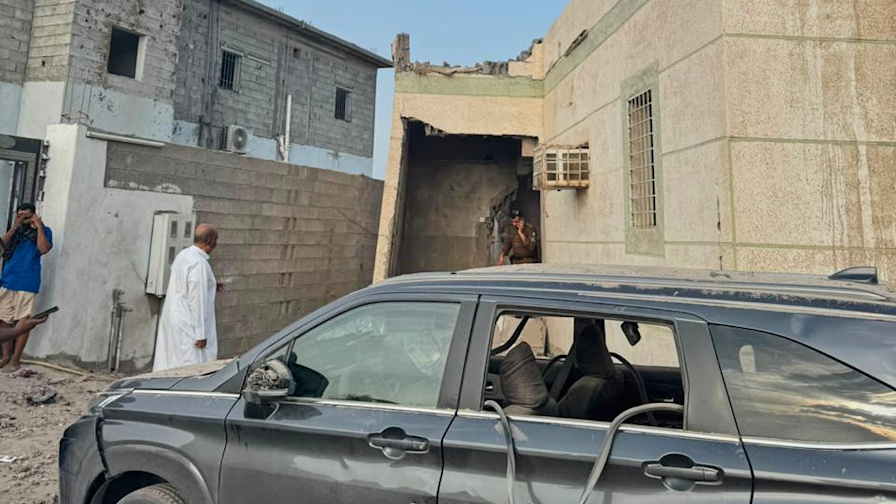
An Iranian commercial ship was struck early Sunday near the Strait of Hormuz, with one person killed, Iranian state media say. Meanwhile, the Iranian-backed Houthi rebels in Yemen said they fired drones and missiles toward southern Saudi Arabia, putting new pressure on a key U.S. ally in the region. State-run media said an Iranian commercial vessel was stuck off Qeshm Island, the largest island in the Persian Gulf that sits on the Strait of Hormuz, with one person killed and three wounded.


Four runners from Helen and Douglas House in Oxford will take on the race dressed as beds.


Founder Tim Howe now wants to take The Longevity Games into socially deprived areas of Swindon.


Stories of Only Fools and Horses, Hairy Bikers, and Silence of the Lambs were among our most read.

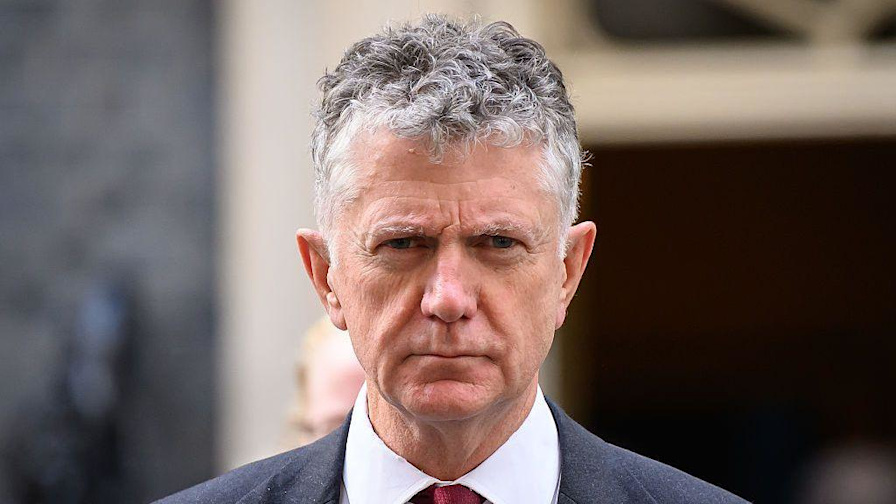
In rare public remarks, Jonathan Powell said now was not the time for European nations to take their “foot off the gas”.


Fundraising for a second helicopter for Lincolnshire and Nottinghamshire reaches the halfway point.
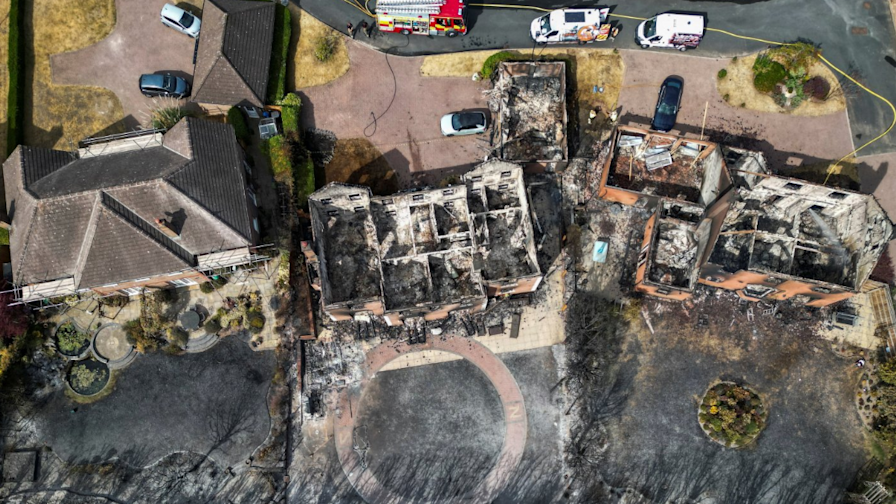
Politicians and firefighters discuss how we should tackle future wildfire risks.


The free event at the Hull jail will be part of Heritage Open Days on Wednesday and Thursday.


The site has not found private-sector funding because the risk is “too great,” its boss says.

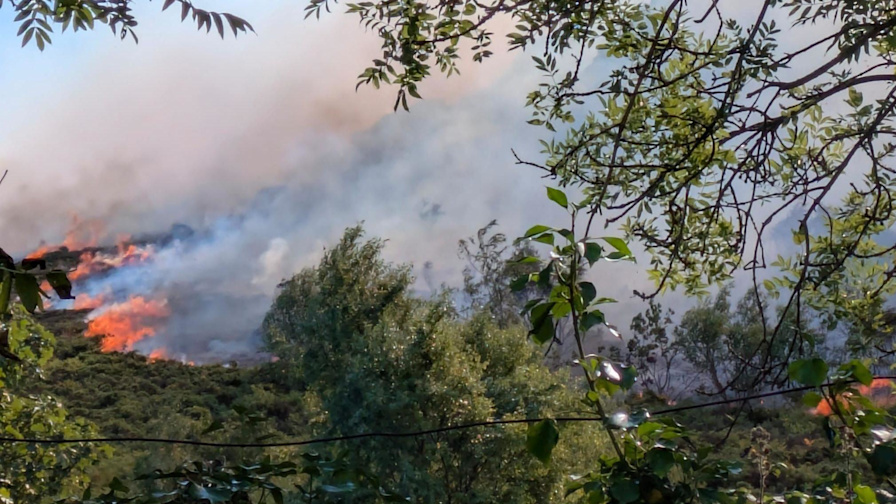
Bangor University researchers say the scale of damage is far greater than what is immediately visible.


A temporary library opens while major work continues at Lancaster Central Library.


Residents are trying to secure the long-term future of the Gawthorpe landmark.
Andrew Privett says he wants to support a charity that “is a lifeline to our family” as it cares for his son.
Powered by WPeMatico