
Robocalls and scam calls persist during pandemic, so Americans have stopped answering the phone

Is it safe to answer the phone? Short answer: No. It’s probably a robocall spammer.
Sometimes, they claim Social Security Administration or the Internal Revenue Service is on the line. (They aren’t; neither service will ever threaten you or demand immediate payment on the phone.) Or they call saying your car’s warranty is expiring and that your credit card interest rate could be lowered.
Three out of 4 Americans said they were targeted by phone scammers over the last year, finds a survey done for Hiya, which provides cloud-based phone call performance management services for companies including AT&T and Samsung.
The bombardment of robocalls, many of which come from scammers seeking to bilk you out of money, has led many to simply not answer their phone when the caller is unknown.
And for good reason. On average, those who fall for scam calls lose $182, with some losing more than $500, according to the survey of more than 2,000 consumers and 300 business professionals conducted Dec. 23-29, 2020, for Hiya by market research firm Censuswide.
Apple Maps:App includes accident, speed trap reporting in iOS 14.5 update
True or false:You should reboot your computer every day
The robocall and scam call deluge has led many to just avoid answering their phone –about 94% of those surveyed said they let unidentified incoming calls go unanswered. That comes at a time – during the coronavirus pandemic – when consumer and business use of voice calls nearly tripled, increasing 184%, says Hiya’s “State of the Call 202” report.
“Businesses are using the voice call more than ever to reach customers and the public are picking up the phone to connect with friends, family and colleagues,” said Hiya CEO Alex Algard in the report, out Friday. “At the same time, this crucial communication tool is being hijacked by hackers and scammers, exploiting our need to feel connected and informed.”
Robocalls keep on coming
The robocall bonanza shows no signs of slowing. More than 4 billion robocalls targeted phones across the U.S. in January, a 3.7% increase over the month of December, according to YouMail, a company that provides anti-robocall services.
During January, robocalls averaged 129.5 million calls daily, according to YouMail’s Robocall Index, or about 1,500 calls each second.
Robocalls did decline in 2020 as the COVID-19 pandemic resulted in the closing of some call centers, YouMail says in its report. The estimated 45.9 billion robocalls to consumers in 2020, however, was 50% more than in 2017, the company says.
But the robocall volumes “appear to be resuming their slow journey back toward their pre-pandemic levels,” said YouMail CEO Alex Quilici in the report. YouMail offers a free robocall blocking app for mobile phones.
During the coronavirus pandemic, new types of phone scams have arisen including those promising tests and cures, expedited stimulus payments and texts about COVID-19 support and pandemic tracing.
But many of the traditional scams remain tops and have more targets since many Americans are at home and using their smartphones as their main communications device for work and personal calls.
“The reality of it is the fraudsters are always changing tactics,” said Hiya president Kush Parikh “They are always trying to figure how to pounce on whatever the latest trend is and obviously right now there’s fraud happening around vaccinations. There’s this cat-and-mouse game always happening.”
The harms of not answering
The amount of consumers not answering unidentified calls (94%) is significantly higher than a year ago (72%), Hiya found. It may seem counterintuitive, but that increased rate of unanswered calls can lead to more calls being initiated.
Businesses have expensive call centers, too, and when calls aren’t answered, “whether that’s customer service or sales … if people end up not answering those calls what do they end up doing? They call more,” Parikh said. “So legitimate businesses not just fraudsters are actually calling more because people are answering less.”
Public health can be impacted, too, as COVID-19 vaccine scams have more than doubled since September, Hiya’s data finds. Scammers can take advantage of interest in getting vaccinated – and confusion about the vaccination process – to lure victims.
Hiya estimates it saved its corporate and consumer customers about $2.3 billion in 2020. But that doesn’t take into account the lost time that scam victims spend extricating themselves from scams. Add that in and the lost funds and productivity to scam calls likely surpassed $10 billion last year, Parikh said.
Regulators, wireless providers and security companies have focused on blocking robocalls.
The Federal Communications Commission and Federal Trade Commission have fined phone companies allowing coronavirus-related robocall scams. The FTC has worked with the Justice Department to block illegal robocalls and the FCC is requiring phone companies to adopt new caller ID features by June 30, 2021. Those actions would combat “spoofing,” where a false caller ID makes a call appear to be coming from a nearby location.
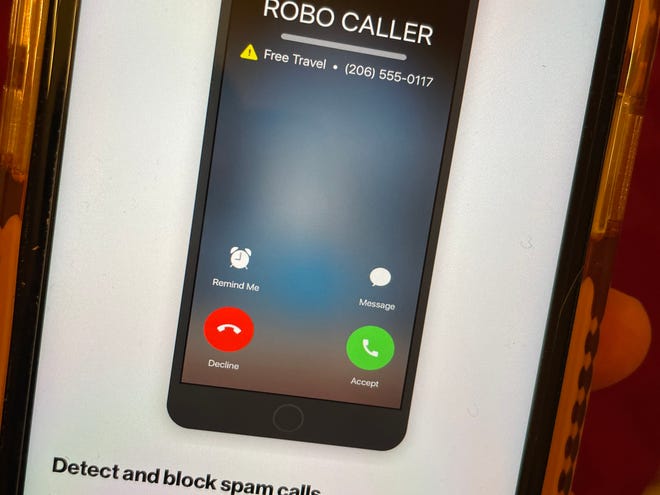
How to rebuff robocalls
- Hang up. If you answer the phone and hear a recorded message, you can hang up. It’s likely a scammer.
- Use call blocking technology. Wireless providers including AT&T, T-Mobile and Verizon have also adopted technology to block calls from getting to consumers, so check with your provider about possible call blocking features.
- Check the number. Remember, a scammer can make their call look like its coming from a local number.
- Read up on robocalls. For more information about robocalls, scam calls and call blocking go to the FCC website and FTC website.
Follow Mike Snider on Twitter: @MikeSnider.
Powered by WPeMatico