
Democrats’ big midterm wins could change how we elect the next president

Democrats’ big midterm wins could change how we elect the next president
A compact between states might give Democrats the power to prevent candidates from winning the White House without winning the popular vote — if they choose to use it.
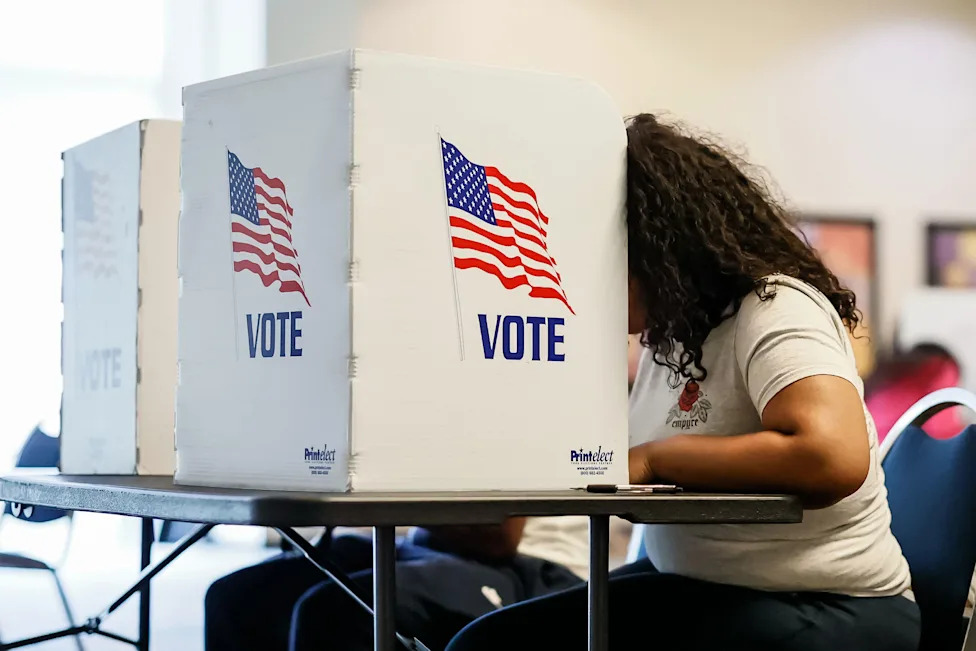
Could this year’s big blue midterm wave transform how America elects its next president? Now that Democrats have won complete control of governor’s mansions and both legislative chambers in five battleground states — Pennsylvania, Michigan, Wisconsin, Nevada and Arizona — there is a chance that the Electoral College, as we know it, could soon become a thing of the past.
That isn’t speculation. In fact, the plan is already in motion. Over the last two decades, 18 states and Washington, D.C., have formally agreed to award all of their electoral votes to whichever presidential ticket wins the most votes nationwide, regardless of the outcome in their own state or district. Until now, this legal agreement — official name: the National Popular Vote Interstate Compact (NPVIC) — hasn’t taken effect because the jurisdictions that have joined it only control 222 total electoral votes, which falls short of the 270 required to activate the compact (and elect a president).
But what if you add Pennsylvania (19 electoral votes), Michigan (15), Arizona (11), Wisconsin (10) and Nevada (6) to the list? That gets you to 283 (assuming that all of them join and the compact survives potential constitutional challenges).
Since Election Day, the Democratic shift in statehouses across the country has been overshadowed by the massive Democratic shift on Capitol Hill. But as the dust settles, attention is turning toward a new possibility: that a handful of states might suddenly have the power to ensure that whoever wins the national popular vote in 2028 will also win the presidency (which hasn’t always been the case).
“The time is right,” Carrie Rheingans, a Democrat in the Michigan House of Representatives, told the New York Times this week. “This blue tsunami is really going to help push this forward across the whole nation.”
“National popular vote will be something that we’ll prioritize early in the session,” added Kelda Roys, a Democratic state lawmaker in Wisconsin.
Here’s everything you need to know about the national popular vote compact — and its chances of taking effect.
How does the Electoral College currently work?
The Electoral College is a system of indirect democracy in which the winner of the U.S. presidential election is determined not by the combined number of votes a candidate has earned across all states — aka the “popular vote” — but rather by the number of “electoral votes” they’ve amassed by winning in individual states.
With minor exceptions, the candidate who gets the most votes in a particular state on Election Day is awarded all of that state’s electoral votes, which match the number of senators and representatives it sends to Congress. Whichever presidential ticket secures a majority of electoral votes — that is, 270 — wins.
Due to the winner-take-all nature of the Electoral College, candidates tend not to campaign in states that consistently vote Democratic (blue states) or Republican (red states). Instead, they focus on the small number of states (known as swing states, battleground states, toss-up states or purple states) that could go one way or the other.
The Founding Fathers established the Electoral College in the Constitution. Some of them wanted qualified citizens to elect the president by popular vote; others wanted Congress to elect the president. The Electoral College was the compromise they landed on.
Today’s Electoral College system evolved over time as individual states passed their own winner-take-all laws. But the Founders never specified how electors — the ones who cast the electoral votes — would be appointed. Instead, the Constitution explicitly delegates that power to the states themselves, saying they can choose their electors “in such Manner as the Legislature thereof may direct.” National popular vote advocates argue that this clause gives state lawmakers “a built-in way to reform the system.”
How could the national popular vote compact change America’s presidential elections?
Prior to the 20th century, three presidents won the White House without winning the popular vote: John Quincy Adams in 1824, Rutherford B. Hayes in 1876 and Benjamin Harrison in 1888. But the idea for a national popular vote compact only started to gain traction among scholars after George W. Bush lost the popular vote in 2000 and wound up in the White House anyway. Sixteen years later, Trump’s popular-vote loss to Hillary Clinton — by a margin of nearly 3 million ballots — added more fuel to the fire.
The Bush and Trump victories also polarized the issue, making Democrats more open to the idea of reform — and Republicans more opposed (in general).
The NPVIC was introduced in 2006 by John Koza, a computer scientist and former Democratic elector who co-invented the lottery scratchcard. The idea is simple. First, individual states agree to award all of their electoral votes to the winner of the national popular vote. When enough states agree — that is, enough states with a combined total of at least 270 electoral votes — then the compact will take effect and the candidate who earns the most popular votes nationwide will be guaranteed enough electoral votes to win the White House. No constitutional amendment required.
National popular vote proponents say that their plan will completely change the way candidates campaign for (and even govern as) president. Rather than lavishing all their time, energy and resources on a small handful of swing states, aspiring commanders in chief would in theory have to cater to voters everywhere in hopes of maximizing their nationwide vote tally.
In April 2007, Maryland became the first state to sign on. Ten more jurisdictions followed suit before the 2016 election (California, Hawaii, Illinois, Massachusetts, New Jersey, New York, Rhode Island, Vermont, Washington and the District of Columbia), with another eight joining the compact after Trump became president (Colorado, Connecticut, Delaware, Maine, Minnesota, New Mexico, Oregon and Virginia).
Republican-led chambers have adopted the NPVIC in New York (2011), Oklahoma (2014) and Arizona (2016) — but generally, Democrats have needed complete statehouse control to enact it into law.
Which is where Democrats’ shiny new trifectas in Pennsylvania, Michigan, Arizona, Wisconsin and Nevada come into play.
What’s next
According to the Times, “lawmakers in key states said on Thursday that they had already begun having conversations this week about introducing legislation to join the agreement in the next session, and were hopeful that they would succeed ahead of 2028.”
But hopeful doesn’t mean certain. One of the new trifecta states, Michigan, failed to get over the line during its previous Democratic trifecta, from 2023 to 2024 — and Nevada fell short in 2019 when its then-Democratic governor vetoed the compact amid fears it could diminish his small state’s outsized influence over presidential elections.
Virginia became the most recent state to join the compact after Democrats there won a trifecta in 2025. Republicans called the move an “unconstitutional assault on our democracy,” arguing it undermines the influence of Virginia voters.
One major question is whether lawmakers will prioritize the national popular vote after campaigning in 2026 on more visceral issues like lowering the cost of living. “Time will tell,” Clinton Anderson, a Democratic state assemblyman in Wisconsin, told the Times. “I want to make it a priority, but it’s not the thing I heard on the doors I knocked.”
Another question is what might happen in the courts if the compact actually kicks in. Notre Dame law professor Derek Muller has argued that the NPVIC would be unconstitutional without congressional approval — which, in his view, is required under the Constitution’s Compact Clause.
“It’s a very real possibility that enough states join this compact,” Muller told the Times. But, he added, “there will be a lot of challenges.”

The new policy, which comes after a Democratic sweep of the state, will limit the people it will inform the immigration agency about to those who have been arrested for jailable offences.


It was cancelled after a BBC Panorama investigation heard allegations from three former cast members.


Santiago Peña was ousted due to a banking crisis which left millions of people unable to access their money.


Rick Webb is taking part in a remembrance event to honour those who lost their lives in Afghanistan.


The spectacle is just one of the many colourful tributes for Remembrance Day across north-west England.


Worshippers are marking the Hindu Diwali festival in temples across the region.
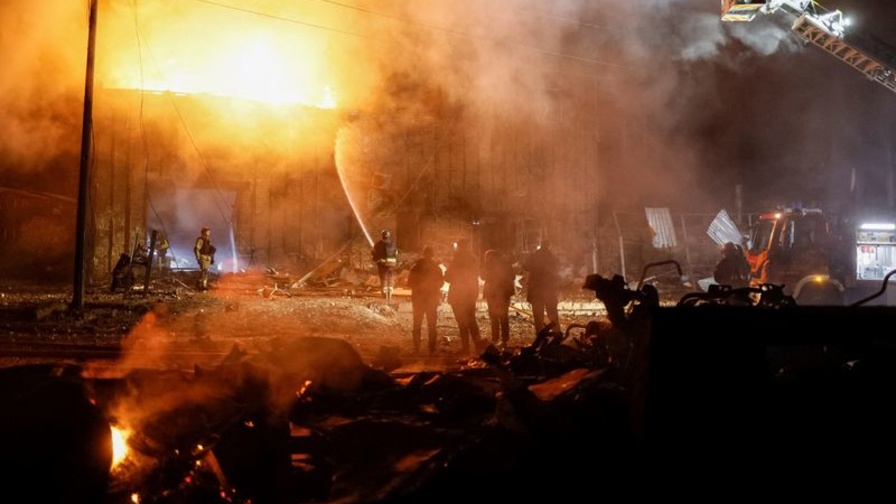
Nov 7 (Reuters) – Russia said its forces carried out a massive overnight strike on what it described as targets in Ukraine’s military-industrial sector and energy and transport infrastructure in Kyiv


David Olusoga’s research linked memorials to historical records to uncover forgotten stories.

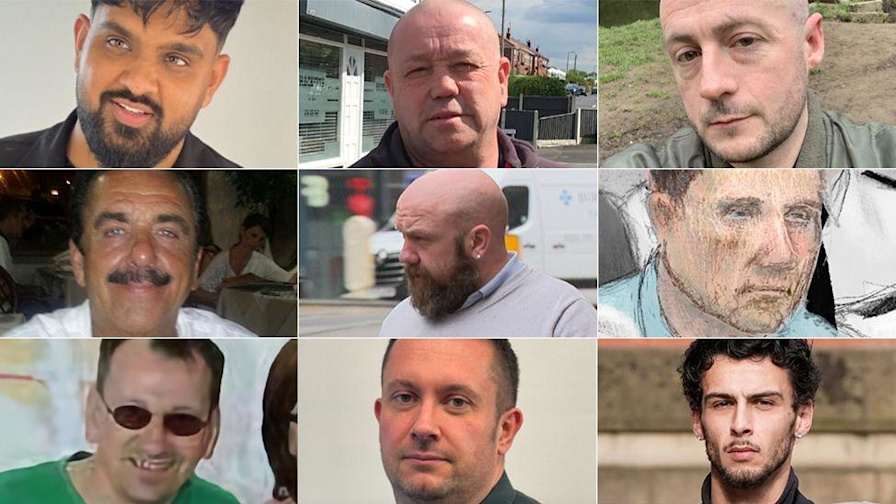
The prosecution has been outlining its case against nine men accused of abusing an unconscious woman.


Raymon Daniel, who runs a coffee kiosk, says he may have to close and is now stuck in limbo.

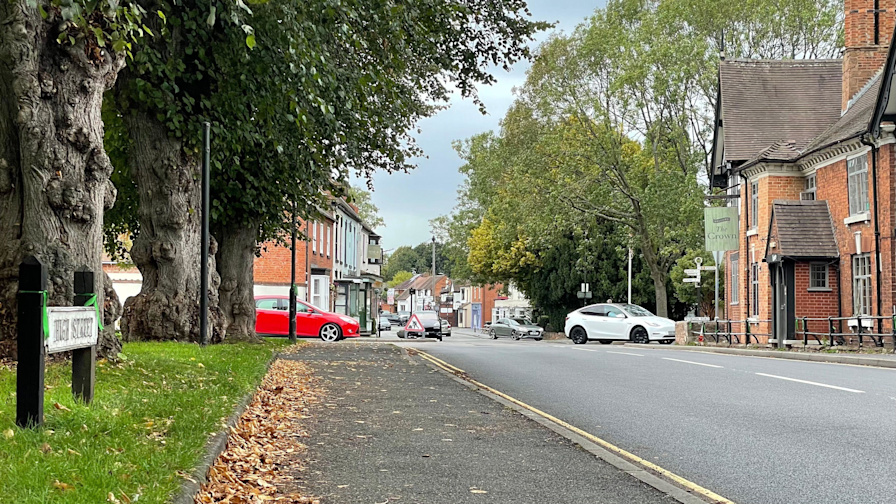
Being considered a town could make it harder for 800 homes to be built on green belt land.
A woman says she feels vulnerable after being struck in the neck when a firework was thrown from a car.


A round-up of stories from local newspapers and the BBC from the past week in the West of England.


Concrete planters are removed from Redcar High Street and payment withheld, the council says.


Cala Homes is looking to get more detailed permission signed off for just over 230 homes.

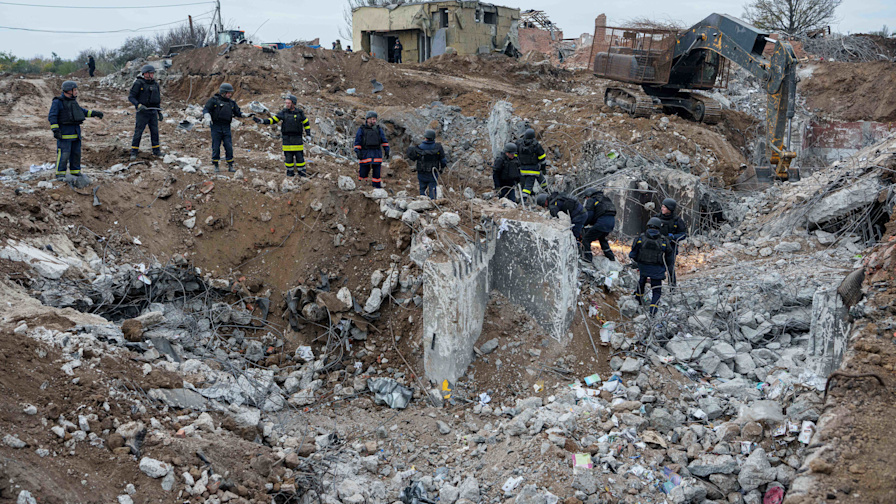
KYIV, Ukraine (AP) — Missile explosions struck Kyiv and left at least five people injured early on Saturday as Ukraine prepared for new talks next week with Russia and the United States.Negotiators from Russia, Ukraine and the U.
Jersey and Guernsey Post issue advice about the last recommended dates to send letters and parcels.


Locals worry about grid pressure and water pollution amid other proposed energy developments.


Oxfordshire farmer warns summer drought could affect Christmas tree production for years to come


It’s hoped the birds of prey will tackle the resident rat problem at allotments in Wallingford.
Powered by WPeMatico