
States are contacting Medicaid enrollees about new work requirements. Here’s what people should do to keep coverage.

States are contacting Medicaid enrollees about new work requirements. Here’s what people should do to keep coverage.
Medicaid beneficiaries will have to meet new rules starting Jan. 1 and are being urged to check whether they will still be eligible.


State health authorities are urging people enrolled in Medicaid to check whether they will remain eligible when new rules kick in that could leave millions of Americans without access.
From Jan. 1, Medicaid beneficiaries in dozens of states will have to work, study or volunteer for at least 80 hours a month or meet a minimum income requirement to keep their coverage, among a series of new rules due to take effect.
Many who are still eligible for the program risk losing coverage because of the “added paperwork” and “the hoops you have to jump through,” Nate Crippes, a lawyer at the Disability Law Center in Utah, told the Associated Press.
The Congressional Budget Office estimated in October 2025 that the new work requirement alone would leave about 5.3 million more people uninsured by 2034.
A group of 25 Democratic-led states and the District of Columbia sued to temporarily block the rules in June, saying it unlawfully narrowed exemptions for people with serious medical conditions. A federal judge denied the request in July.
The Centers for Medicare and Medicaid Services (CMS), the federal agency that administers the program, said in June that the changes were designed to promote “economic stability, self-sufficiency, and independence,” and that they would help Americans build skills through work, education, job training or community service.
Nevada, North Carolina and Pennsylvania are among the states that have issued guidance. Pennsylvania has urged residents to update their contact information and check whether they qualify for an exemption, as it mails notices to more than 700,000 expansion enrollees.
Nebraska began rolling out the changes in May, Montana in July and Iowa will follow in December. Montana’s grace period ended on Oct. 1, so enrollees there can now lose coverage for not complying.
Here’s what to know about what the new requirements are, who is exempt, how people can prove they qualify and what paperwork they’ll need to keep their Medicaid coverage.
What are the changes to Medicaid coverage?
Starting Jan. 1, 2027, 40 states and D.C. will be required to introduce a work and community engagement requirement for adults covered by Medicaid’s expansion to low-income adults — people ages 19 to 64 who are not pregnant and not enrolled in Medicare. In 2025, about 20 million of the 82.4 million people enrolled in Medicaid were in that group.
Children, adults aged 65 and over and people who qualify through a disability or as low-income parents are not covered by the new rules.
Enrollees in that group will need to work, be enrolled in school at least half-time, take part in a work program or volunteer for at least 80 hours a month. These activities can be combined to reach the monthly total, the federal rules say.
They can also meet the requirement through income alone, earning the equivalent of 80 hours on the federal minimum wage — at least $580 a month in 2026. Income can count money from other people in the household, or from outside a job such as unemployment benefits.
What do enrollees need to do?
Rather than telling the state each month that they have met those requirements, enrollees will be required to prove that they met them for at least one month before the month they apply. This is also the case at renewal — which will take place twice a year — when existing enrollees must show they met it for one or more months between renewals. Some states, like New Hampshire and Indiana, have chosen to check more often.
States have to check the records they already have first, like wage and unemployment data, SNAP and TANF files, Medicaid claims and school enrollment, before asking anyone for proof. Applications and renewal forms will include new questions and, in a few states, a separate portal for people to prove they meet these criteria.
If a state cannot verify someone from its own data, it must send a notice of noncompliance, which must be answered within 30 days or its coverage ends. That notice has to explain how to show compliance or exemption, and how to reapply if they lose coverage.
Who is exempt?
Enrollees are exempt from meeting the requirement if they fall into one of these groups:
-
medically frail, or have medical needs that significantly impair their ability to comply
-
pregnant or postpartum
-
a parent, guardian or caregiver of a child age 13 or younger, or of a disabled person
-
a veteran with a total disability rating
-
Native American and Alaska Native people
-
a former foster care youth
-
in a drug or alcohol treatment program
-
in prison or jail
-
already meeting TANF work rules, or in a household receiving SNAP without a SNAP exemption
Those who are medically frail are facing significant changes. States must first look at 12 months of a person’s Medicaid claims to determine if a person is medically frail. The condition must significantly impair a person’s ability to work, study or volunteer.
That 12-month history will not exist for someone applying for the first time, and may be thin for anyone who enrolled only recently. Those are the people most likely to be asked to prove it themselves.
When the records cannot settle it, the new rules let states accept an enrollee’s own account of their condition until the end of 2027. Starting in 2028, they can do that only once during a period of enrollment.
After that, states must request documentation, which could include a doctor’s certification, medical records, a disability award letter or a provider form. States cannot end someone’s coverage solely because paperwork does not exist or cannot reasonably be obtained.
How does this apply in my state?
The requirement applies in the 40 states and the District of Columbia that expanded Medicaid to low-income adults.
In at least six states — Arkansas, Idaho, Indiana, New Hampshire, North Carolina and Ohio — enrollees will have to provide documentation that they are medically frail rather than simply self-report, according to ABC News.
Ten states never expanded Medicaid, and in six of those nobody is affected, because the group the requirement targets was never eligible there. The exceptions are Georgia, South Carolina, Tennessee and Wisconsin, which cover some low-income adults through waivers and whose enrollees are caught by the new rules.
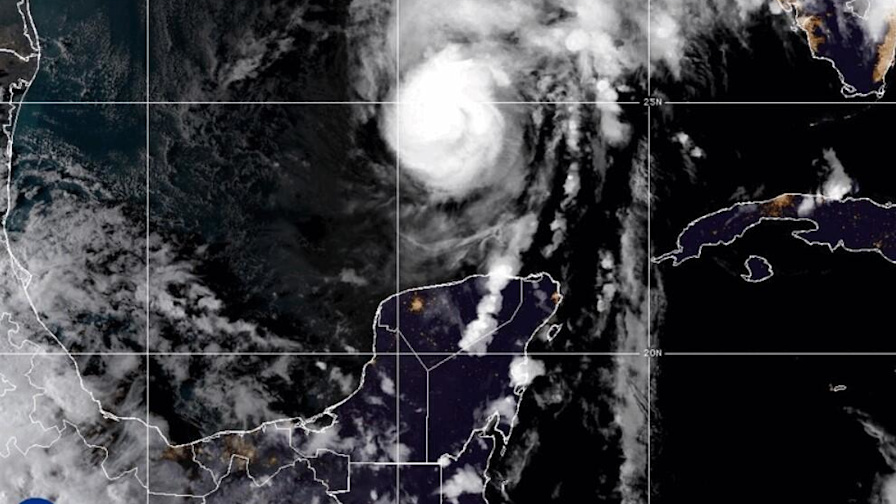
Hurricane Isaias, the first Atlantic hurricane of 2026, has strengthened into a Category 2 storm as it takes aim at the Gulf Coast from Mississippi to the Florida Panhandle.

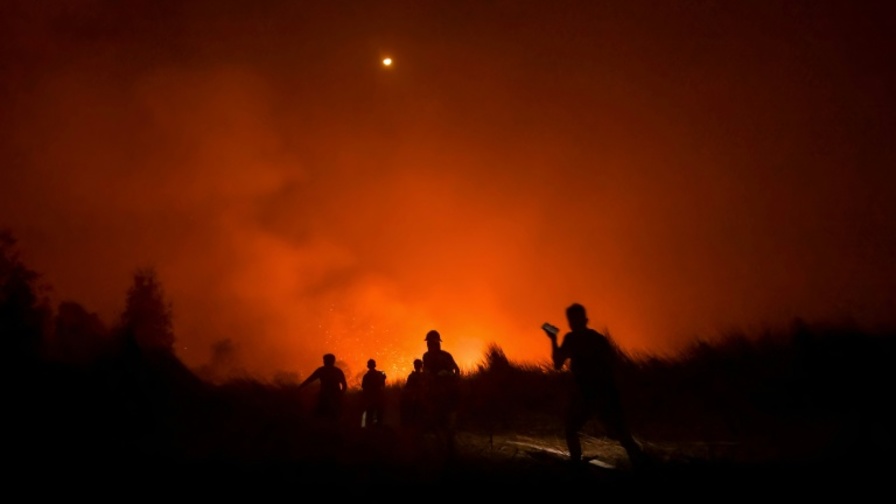
The orangutan clings to the top of a mostly leafless tree in Indonesia’s Borneo, as waves of thick smoke from the forest fires burning below waft over her.Novita was rescued by the Borneo Orangutan Survival Foundation, which has taken in several apes caught up in forest fires.


Government inspectors have also raised concerns about how the force was managed.


Musk has taken pot-shots at Reliance owner Mukesh Ambani as Starlink struggles to launch in India.


Pete Hegseth says the execution will be public, but a legal expert says the “unprecedented” decision is on “uncertain legal terrain”.
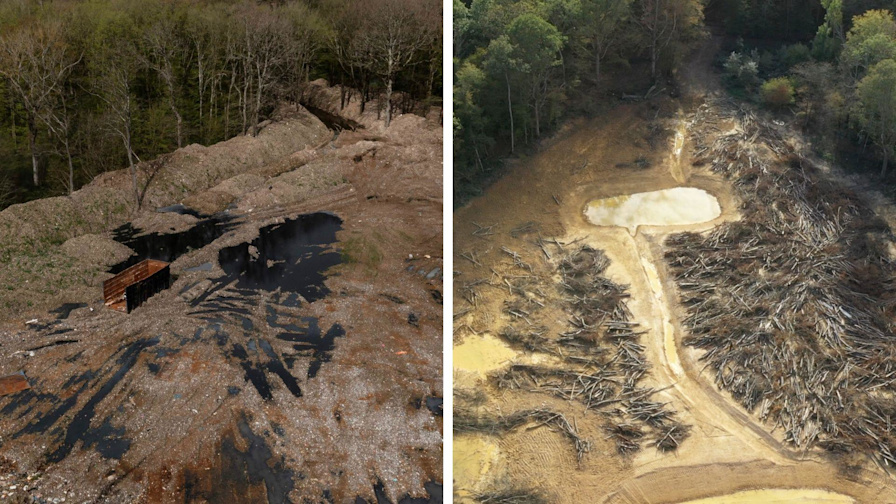
Concerns remain over the ancient Kent woodland’s future after 39,500 tonnes of rubbish were cleared.


Labour’s Sagal Abdi-Wali beats Green Party leader Zack Polanski to hold the north London seat.


The Green leader faces pressure over his response to a party motion declaring Zionism a form of racism, as well as his by-election loss.


Snowdon failed to follow orders to apologise as ordered as part of a code of conduct complaint.


By Vibhuti Sharma, Munsif Vengattil and Aditya Kalra MUMBAI, Oct 9 (Reuters) – The view from Indian engineer Tushar Shetty’s Mumbai apartment captures a tension playing out around the world as the
BRUSSELS/SINGAPORE, Oct 9 (Reuters) – The decision was expected to take minutes. But after nearly three years of debate, members of the world’s leading authority on climate change still can’t agree on a timeline to publish its next review of the latest science on the warming planet.

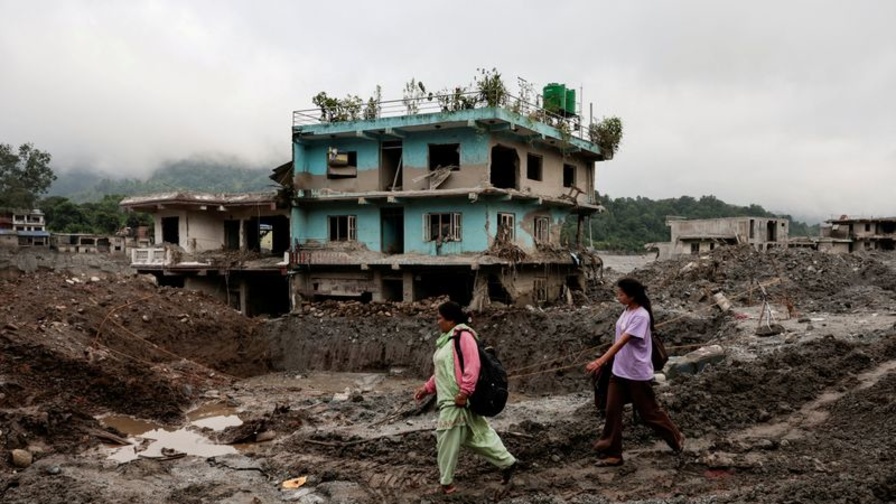
Every day, Shanti Dangol stares down at Nepal’s Trishuli River from her makeshift shelter, searching for traces of the home she lost and wondering when she will have a roof over her head again.She shares the plot with 25 other families who also lost their homes.


By Olena Harmash KYIV, Oct 9 (Reuters) – Sand-filled blast barriers and concrete shelters are multiplying at filling stations in Ukraine in a push by retailers to fortify their networks as Russia

By Alasdair Pal Oct 9 (Reuters) – New Zealand’s national censor said on Friday it would be unable to block the planned livestreamed execution of a former Army major in the United States, as rights
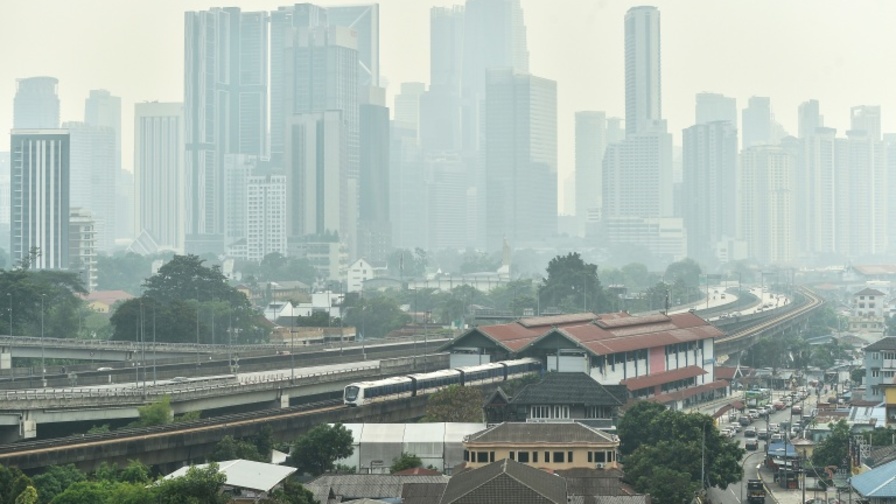
Malaysia closed schools in Kuala Lumpur and other parts of the country on Friday, as haze from fires in neighbouring Indonesia again plunged local air quality to among the world’s worst.Kuala Lumpur on Friday showed a reading of around 170 API.
The city was the second-most polluted globally behind neighbouring Singapore on Friday morning, Swiss-based air monitor IQAir said.


Lawmakers in Okinawa adopted a resolution on Friday calling for revisions to a pact seen as giving the United States military preferential treatment in Japan, following a murder allegedly committed by an American Marine. The United States has around 54,000 military personnel stationed in Japan, mostly on Okinawa.


The Victor 1895 Community Heritage Trust is raising £100,000 in the hope of buying the sailing barge.


Upcoming Skybus flights between Guernsey and Alderney and Alderney and Southampton are affected.

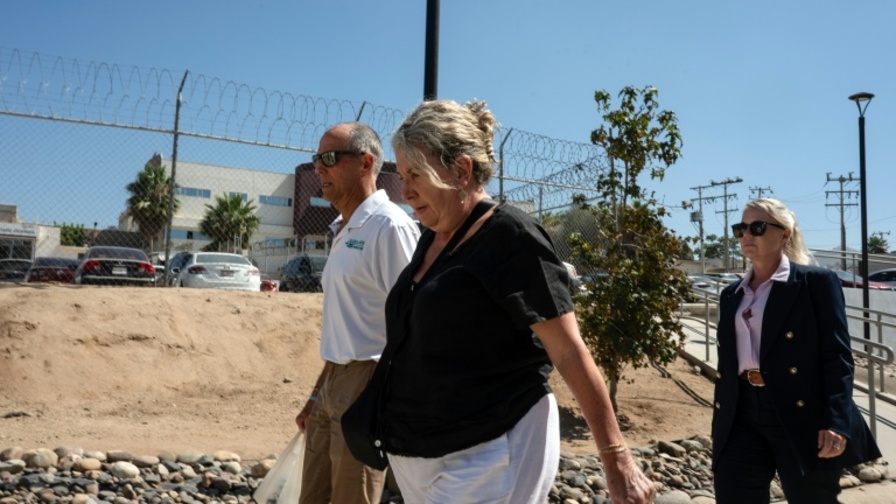
A Mexican judge is expected to hand down his verdict Friday in the high-profile murder trial of three men accused of killing two Australian surfers and their American friend in 2024.The prosecution and defense presented their closing arguments on Thurday, and the judge said he would announce his verdict Friday.

Egio Spineto filters his water and avoids eating locally grown produce in case it is contaminated, but the chemicals from a factory near his home in northern Italy are in the very air he breathes.But ARPA has detected the PFAS class of chemicals that Syensqo produces in the ground water and air.
Powered by WPeMatico