
‘Scromiting,’ a bizarre condition linked to chronic marijuana use, is on the rise
‘Scromiting,’ a bizarre condition linked to chronic marijuana use, is on the rise
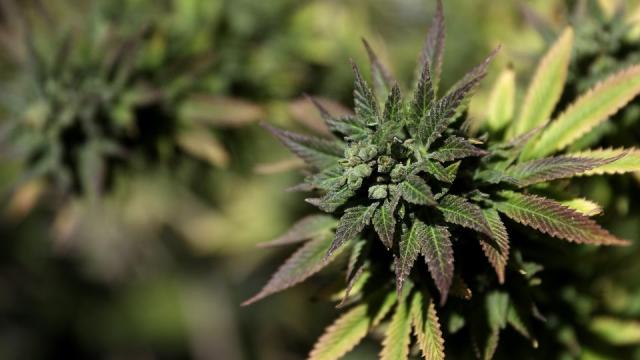
It was a pain worse than childbirth, said a TikTok mom as she described bouts of uncontrollable vomiting after marijuana use.
“I was crying and screaming and I was like ‘I can’t take this anymore!’ I hate my life,” she said. “I’m just begging God, like please make it stop!”
Dubbed “scromiting” by social media due to the combination of screaming and loud vomiting, the medical name for the condition is cannabis hyperemesis syndrome, or CHS, which is on the rise in the United States. Habitual users of cannabis, including teenagers, are showing up in emergency rooms complaining of severe intestinal distress.
“They are writhing, holding their stomach, complaining of really bad abdominal pain and nausea,” said Dr. Sam Wang, a pediatric emergency medicine specialist and toxicologist at Children’s Hospital Colorado, who treats adolescents with the condition.
“They vomit and then just continue to vomit whatever they have in their stomach, which can go on for hours,” Wang told CNN in a prior interview. “They often say they took a scalding hot shower before they came to the ER but it didn’t help.”
Immediate treatment consists of anti-nausea medications and IV fluids to combat dehydration from the vomiting. But patients also undergo a battery of tests to rule out other causes: blood and urine tests, expensive CT scans, unpleasant upper GI endoscopy and gastric emptying tests, to name a few.
For some adolescents, those tests could be repeated again and again.
“For some of our kids, this is their fifth ER visit in the past two months, with symptoms that they can’t control,” Wang said.
And if they wait too long to come in, the condition can be life-threatening.
“Regardless of whether it’s cannabis hyperemesis syndrome or another virus that makes you vomit a lot,” Wang said, “if you let it go too long, you can have electrolyte disturbances, go into shock and have organ failure. CHS is no different.”
A bizarre condition
Cannabis hyperemesis syndrome burst upon the medical scene in 2004, when a group of Australian researchers wrote about 19 chronic marijuana users who had repeated episodes of abdominal pain and retching. The researchers followed nine of the patients over time and found symptoms went away when cannabis use was stopped but returned when it was restarted.
Oddly, over half of the 19 reported using extremely hot baths or showers to self-treat their symptoms. As more and more cases of CHS began to appear, hot bathing as a home treatment became a recurring theme.
“It’s pretty universal for these patients to say they need a really, really hot shower, or a really hot bath, to improve their symptoms,” he said.

Why hot? “That’s not entirely clear,” said Wang, who is also an associate professor of pediatrics at the University of Colorado Anschutz Medical Campus in Aurora, Colorado.
Tetrahydrocannabinol, or THC, the main psychoactive compound in weed, has access to the body’s pain receptors, so one theory is that the distracting sensation of the extreme heat interrupts the pain cycle, thus easing symptoms.
To compound the strangeness of the disorder, THC and other cannabinoids in the marijuana plant have been used for pain relief — paradoxically relieving nausea and vomiting in cancer patients undergoing chemotherapy. However, despite the popularity of marijuana as a painkiller, study results on its effectiveness have been mixed.
More in Health

Some Americans exempt from new SNAP work requirements

How old is too old to shovel snow? Here’s what heart experts say.
 USA TODAY
701

Popular daily snack found to boost brain blood flow in older adults, new study shows
 Fox News

Still, why would the same compound relieve and also cause pain? Among a myriad of possibilities: dosage levels. Wang points to the ever increasing potency of THC in today’s marijuana products.
“It’s been well documented that the amount of THC that now comes in cannabis is increasing substantially,” Wang said. “In the ’90s the average was like 4% or 5%. Now in Colorado, it’s anywhere from 15% to 20%.”
Another mystery: Not all heavy users of weed are affected by CHS.
“It’s not entirely clear who is predisposed to getting it,” Wang said. “Is it a certain frequency or duration of use? Is it a specific potency? Or is it a specific type of product? We don’t have that data.”
CHS is on the rise
Data show CHS is a national problem. Between 2005 and 2014 when only medical marijuana was legal in most states, a 2020 study found nearly 1 in 5 people hospitalized for cyclical vomiting in the United States reported concurrent cannabis use.
After Colorado legalized recreational marijuana in 2012, Wang and his colleagues found over 800,000 cases of reported vomiting due to cannabis in Colorado between 2013 and 2018. That’s about a 29% increase since legalization, Wang said. The study, published in September 2021, found the rate was highest in counties with no prior marijuana dispensaries.
A newer study, published in July 2025, found emergency room visits for adolescents aged 13 to 21 years across the nation increased more than 10-fold between 2016 and 2023. Yet another November 2025 study found the rate of CHS among adults 18 to 35 rose sharply during the pandemic years of 2020 and 2021 and remained high.
However, all of these studies have been limited by the lack of a medical diagnosis or insurance billing code to enable objective tracking of CHS. To do the studies, researchers had to compare medical records of vomiting with documented or self-reported cases of marijuana use — data that many people decline to provide.
That’s changed. On October 1, 2025, a US federal committee created R11.16, an official medical diagnosis code for cannabis hyperemesis syndrome. The World Health Organization did the same, allowing researchers worldwide to better track the condition. Experts say future studies will be more accurate, allowing researchers to shed more light onto this unusual condition.
For more CNN news and newsletters create an account at CNN.com


Customers who bought the cheese should not consume it and return to the store for a refund.
 Yahoo News

Bartenders hear it all, but these questions and comments will instantly put them on guard.
 Real Simple

“It’s a $2 billion commitment,” Sánchez Bezos said. “And we’re going to continue doing it.”
 Fortune

After plenty of pleading from fans, Olive Garden is bringing back two beloved dishes – but only for a limited time. Here’s what you need to know.
 Tasting Table

For nearly 40 years, the identity of the person who sexually assaulted and killed a 30-year-old woman found along a quiet stretch of rural highway south of Denver eluded investigators. Now, small pieces of preserved evidence – a pair of paper bags placed over the victim’s hands – have provided the answer authorities had been searching for: a DNA match to one of Colorado’s “most prolific serial killers,” officials said Tuesday.
 CNN
CNN

The move adds to a swath of immigration restrictions it’s pushed through since the shooting of two National Guard members.
 HuffPost

The masked burglar broke into the closed Virginia liquor store early on Saturday and hit the bottom shelf, where the scotch and whisky were stored. On Saturday morning, an employee at the Ashland, Virginia-area liquor store found the trash panda passed out on the bathroom floor at the end of his drunken escapade. “I personally like raccoons,” said Samantha Martin, an officer who works at the local animal control.
 Associated Press

Discover the surprising real estate value of the Rockefeller Center Christmas Tree—and why one family chose to give theirs up.
 Realtor.com

The White House said records sought in Capitol riot litigation are “clearly constitutionally protected.”
 Politico

Lisa Marie Presley ended her marriage to Michael Jackson after the late singer disappeared on a European Disneyland vacation with two young brothers, whose family is now seeking a $213 million payout from his estate, sources say. The National Enquirer can exclusively report that Elvis Presley’s only child slapped the Gloved One with divorce papers […]
 National Enquirer
Powered by WPeMatico