
Delta variant circulating in Minnesota, health officials urge vaccination

Credit: Navy Medicine via Flickr
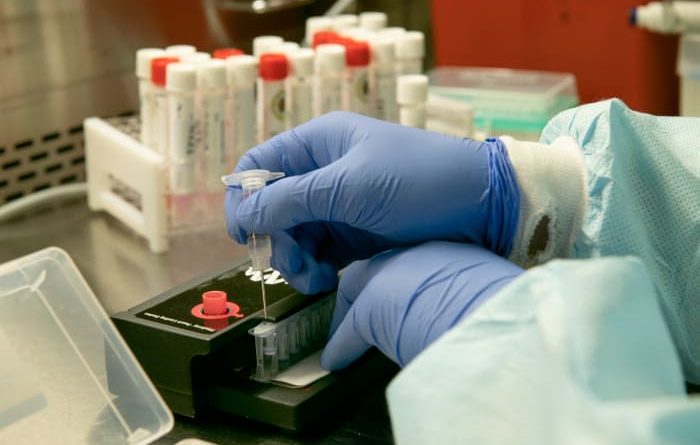
More than 40 cases of the coronavirus variant known as “Delta” have been confirmed in Minnesota through genomic sequencing, though health officials still feel that Minnesota is in a good position in the race between vaccines and variants.
“We have seen 43 cases of the Delta variant, otherwise known as B1.617.2 or the variant first identified in India, since Dec. 1, 2020. It is important to remember not all cases are sequenced so there are likely more Delta variant cases in Minnesota,” a spokesperson for the Minnesota Department of Health (MDH) wrote in an email to Bring Me The News.
The Delta variant has been associated with greater transmissibility than than the B117 variant from the United Kingdom, which itself is believed to be 40-70% more contagious than the original strain that launched the globe into a pandemic in 2020.
Of the 43 confirmed cases in Minnesota, 23% have resulted in the infected person being hospitalized.
MDH says the vaccines are effective against the Delta variant, though studies on that specific relationship are still preliminary. But it spells the importance of Minnesotans continuing to get vaccinated.
There are currently 13 counties in Minnesota where the adult vaccination rate is below 50%. More on that here.
Follow Bring Me The News on Twitter
“The overwhelming number of people experiencing serious COVID-19 illness recently, regardless of strain, are unvaccinated. The vaccine reduces overall transmission—and thus the chances for mutations and variants—and in many cases can protect against variants,” the spokesperson for MDH said. “But unvaccinated folks allow variants to continue to spread. That’s why it is so important for as many Minnesotans to get vaccinated as possible – to stop the spread of the variants.”
According to studies out of England, via the Wall Street Journal, two doses of the Pfizer/BioNTech vaccine lowers the risk of infection with Delta by 79% 14 days after receiving the second dose, and reduces the risk of severe illness in the event of an infection by 96%. Other vaccines are also effective at reducing infection and hospitalization risk, though tests are continuing to confirm how effective.
However, evidence from the U.K. also suggests that Delta is more effective at evading the immune response in those who have had only one shot of the two-dose regimen, which is why it’s vital to get fully vaccinated.
Bring Me The News asked about the status of the pandemic and how it could evolve in the coming weeks and months. The answer provided by MDH came in the form of bullet points, so we’ll keep them as they were sent.
- We’re in a good place right now with the pandemic in MN.
- The virus seems to be waning, and the vaccines are winning.
- But it isn’t over yet, and we need to be watchful and mindful that COVID is still out there.
- We still have more work to do to get more people vaccinated.
- The unvaccinated are still at risk for the virus – and it has a way of finding the unvaccinated.
- Variants will spread among the unvaccinated.
- While it’s great that we have almost 66% of Minnesotans 16+ vaccinated, that still leaves more than 2 million unvaccinated Minnesotans, including many younger children.
- We need to continue to work on vaccinating our younger residents, as well as all adults.
- We have areas of the state where vaccination rates are much lower than the statewide averages. These pockets of unvaccinated are at risk for outbreaks of the virus that could yet tax their local or regional resources. It’s critical we make as much progress as possible as soon as possible in suppressing the virus.
While the Delta variant is in Minnesota, the dominant strain of the coronavirus here currently is the B117 variant, which comprises 90% of all samples tested by state health officials.
Other variants confirmed in Minnesota are:
- B1427/29 (California variant)
- B1526 (New York variant)
- P1 (Brazil variant), and the Delta strain.
Powered by WPeMatico