France has eased restrictions on giving the AstraZeneca vaccine to people aged over 65 after new trial data proved the shot was effective, health minister Olivier Véran has said.
While the EMA, the bloc’s drug regulator, approved the AstraZeneca jab for use by all adults, health agencies in many EU countries, including France and Germany, advised against its use for the over-65s pending more trial data from older age groups.
The French president, Emmanuel Macron, sparked consternation by telling journalists it was “quasi-ineffective” for the over-65s, but last week said more data had since become available and he would take the jab if offered.
Véran told French TV that “anybody aged 50 or over who is affected by co-morbidities can get the AstraZeneca vaccine, including those between 65 and 74.” Those over 75 would continue to be given only the Pfizer and Moderna shots only, he said.
The decision means another 1.5m people are eligible from today for AstraZeneca vaccines from family doctors, with France’s slow rollout soon also to be extended to pharmacies. Véran said France should deliver a further 6m first jabs this month.
Meanwhile the French government spokesman, Gabriel Attal, said today all options remained open to rein in rising infection numbers in some areas, including a new national lockdown and regional weekend lockdowns. Le Monde reported that the Paris area could be placed in weekend lockdown from next weekend.
Iraq today received 50,000 Sinopharm vaccines donated by China, the health ministry announced, launching a long-awaited vaccination campaign, AFP reports:
Health ministry spokesman Seif al-Badr told reporters that the first delivery in the early hours meant inoculations could begin.
“The doses will be delivered to Baghdad’s three main hospitals, and maybe to some provinces,” said Badr, who confirmed the jabs were donations.
“We will start vaccinations today, Tuesday,” he said.
The health ministry simultaneously announced it had agreed with the Chinese ambassador in Baghdad to purchase another two million doses, with no details on payment or timing.
Sinopharm affiliate Wuhan Institute Of Biological Products says its vaccine has an efficacy rate of 72.51%, behind rival jabs by Pfizer-BioNTech and Moderna, which have 95% and 94.5% rates respectively.
Hours earlier, on Monday afternoon, the health ministry launched an online platform for citizens to register for vaccinations, but the page was not functional on Tuesday.
It has said health workers, security forces and the elderly would be prioritised and that the vaccine would be administered free of charge, but has given few other details.
The first jabs arrived as the Iraqi government faces growing criticism of its handling of the pandemic.
The country has been hit by a second wave of Covid-19 infections, with more than 3,000 new cases reported daily, a few months after they had dropped to around 700 a day, and deaths also tripling to around 25 a day in recent weeks.
To stop the spread, Iraq has imposed overnight curfews during weekdays and full lockdowns on Fridays, Saturdays and Sundays, with obligatory mask-wearing in public.
But there is little commitment by either the public or security forces deployed to enforce the measures, in a country whose health sector has been ravaged by decades of war, corruption and slim investment.
Some Iraqi officials have already been vaccinated. Two current and one former Iraqi official told AFP in January they had already received doses of “the Chinese vaccine”.
They said 1,000 vaccine doses had been gifted to a senior Iraqi politician through contacts in China and had been distributed to top politicians and government officials.
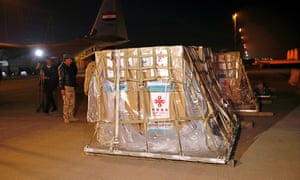
Air freight workers unload the first batch of doses of the Sinopharm vaccine against the coronavirus disease after it arrived at Baghdad international airport, in Baghdad, Iraq, early today Photograph: Hadi Mizban/AP
New York governor Andrew Cuomo has retained a prominent white-collar criminal defence lawyer to represent his office in a federal investigation into the state’s misreporting of Covid-19 deaths among nursing home residents, Reuters reports, citing a spokesman:
Cuomo has come under fire in recent weeks over his office’s role in reporting the official count of coronavirus fatalities among patients of nursing and extended-care facilities, as well as for allegations of sexual harassment levelled against him.
Elkan Abramowitz, a former federal prosecutor working in private practice in New York City, was hired to represent Cuomo’s “executive chamber” – consisting of the governor and his immediate staff – in the US Justice Department inquiry into the Covid-19 nursing home deaths, senior adviser Rich Azzopardi told Reuters in a text message.
Cuomo rose to national prominence for his daily televised briefings last spring, when New York was at the heart of the Covid-19 epidemic in the US.
In January, the attorney general’s office issued a report that cast doubt on the Cuomo administration’s handling of the coronavirus crisis, saying the state health department significantly undercounted the death toll in nursing homes and implemented policies that may have contributed to it.
Hello, it’s Haroon Siddique here, taking over the blog.
You can contact me via the following channels: Twitter: @Haroon_Siddique
Email: haroon.siddique@theguardian.com
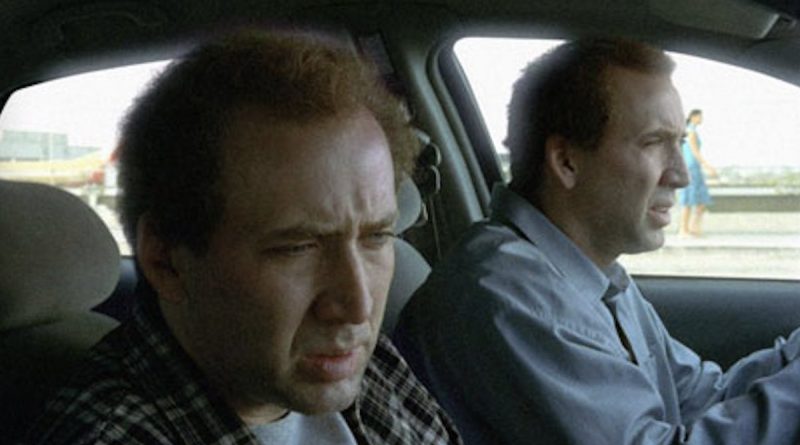
That’s it from me, Helen Sullivan, and Nicholas Cage, who also encapsulates my feelings about liveblogging the pandemic for almost a year straight:
Dave Itzkoff(@ditzkoff)
when it’s March 2021 but it never stopped being March 2020 pic.twitter.com/FPv03bmJDP
March 1, 2021
Here are the key developments from the last few hours:
China said it aims to vaccinate 40% of population by June. Health experts in China say their country is lagging in its coronavirus vaccination rollout because it has the disease largely under control, but plans to inoculate 40% of its population by June.
France, Germany are struggling to sell AstraZeneca vaccine safety. Already facing a daunting Covid vaccination challenge, French and German authorities are fighting to convince more people that a jab from the pharma giant AstraZeneca is just as effective as others.
World won’t be done with Covid-19 this year, the WHO warned. It is unrealistic to think the world will be done with the Covid-19 pandemic by the end of the year, the World Health Organization warned on Monday.
Donald and Melania Trump received the coronavirus vaccine before leaving the White House, according to multiple news reports on Monday. Citing unnamed advisers, the New York Times, CNN and other outlets reported that while other officials, including Joe Biden, Kamala Harris, and the former vice-president Mike Pence, chose to get their shots publicly to encourage confidence in the vaccines, the Trumps opted to quietly get vaccinated in January. There was no detail on which shot they received or how many doses they had been given.
Fauci said the US must stick with two-dose strategy for Pfizer-BioNTech and Moderna vaccines. The United States must stick to a two-dose strategy for the Pfizer-BioNTech and Moderna Covid vaccines, top US infectious disease official Anthony Fauci told the Washington Post newspaper. Fauci said that delaying a second dose to inoculate more Americans creates risks.
Mexico’s coronavirus chief came home from hospital. Mexico’s coronavirus czar is back home after being hospitalized for Covid last Wednesday, but will still be monitored and receive treatment, a health official said on Monday, as the country’s coronavirus death toll passed 186,000.
New infections rose last week for first time in seven weeks. More from the World Health Organization: The WHO director-general Tedros Adhanom Ghebreyesus said new case numbers rose last week in Europe, the Americas, southeast Asia and the eastern Mediterranean. The number of new coronavirus infections globally rose last week for the first time in seven weeks.
Philippines confirmed its first cases of South African variant. The Philippines has documented six cases of the South African coronavirus variant, its health ministry said on Tuesday, raising concern among its experts that the current vaccines might be less effective.
The US downplayed the possibility of sharing Covid vaccines with Mexico. The Biden administration on Monday downplayed the prospect of sharing coronavirus vaccines with Mexico, saying it is focused first on getting its own population protected against a pandemic that has killed more than 500,000 Americans.
Stop doing anal Covid tests on our citizens, Japan told China. Tokyo has requested Beijing to stop taking anal swab tests for Covid-19 on Japanese citizens because the procedure causes psychological pain, a government spokesperson has said.
Data on long Covid in UK children is cause for concern. Scientists have warned that emerging data on long Covid in children should not be ignored given the lack of a vaccine for this age group, but cautioned that the evidence describing these enduring symptoms in the young is so far uncertain.
Fossil fuel emissions in danger of surpassing pre-Covid levels. The world has only a few months to prevent the energy industry’s carbon emissions from surpassing pre-pandemic levels this year as economies begin to rebound from Covid-19 restrictions, according to the International Energy Agency.
Tokyo governor Yuriko Koike said on Tuesday that the pace of the fall in coronavirus cases had eased, expressing concern that it may not be enough to lift a state of emergency remaining in the greater metropolitan area, Kyodo News reported.
“We may not make it in time,” she said, referring to the scheduled end to the emergency state on 7 March for the Japanese capital and three neighbouring prefectures, according to Kyodo.
The world has only a few months to prevent the energy industry’s carbon emissions from surpassing pre-pandemic levels this year as economies begin to rebound from Covid-19 restrictions, according to the International Energy Agency.
New figures from the global energy watchdog found that fossil fuel emissions climbed steadily over the second half of the year as major economies began to recover. By December 2020, carbon emissions were 2% higher than in the same month the year before:
Scientists have warned that emerging data on long Covid in children should not be ignored given the lack of a vaccine for this age group, but cautioned that the evidence describing these enduring symptoms in the young is so far uncertain.
Recently published data from the Office for National Statistics (ONS) has caused worry. The data suggest that 13% of under 11s and about 15% of 12- to 16-year-olds reported at least one symptom five weeks after a confirmed Covid-19 infection. ONS samples households randomly, therefore positive cases do not depend on having had symptoms and being tested:
Two Nigerian nurses were attacked by the family of a deceased Covid patient, the Associated Press reports. One nurse had her hair ripped out and suffered a fracture. The second was beaten into a coma.
Following the assaults, nurses at Federal Medical Centre in the Southwestern city of Owo stopped treating patients, demanding the hospital improve security. Almost two weeks passed before they returned to work with armed guards posted around the clock.
“We don’t give life. It is God that gives life. We only care or we manage,” said Francis Ajibola, a local leader with the National Association of Nigeria Nurses and Midwives.
The attack in Nigeria early last month was just one of many on health workers globally during the Covid pandemic. A new report by the Geneva-based Insecurity Insight and the University of California, Berkeley’s Human Rights Center identified more than 1,100 threats or acts of violence against health care workers and facilities last year.
Researchers found that about 400 of those attacks were related to Covid, many motivated by fear or frustration, underscoring the dangers surrounding health care workers at a time when they are needed most.
Insecurity Insight defines a health care attack as any physical violence against or intimidation of health care workers or settings, and uses online news agencies, humanitarian groups and social media posts to track incidents around the world.
Podcast: why are we feeling burnt out?
It’s getting towards a year since the UK first went into lockdown. That’s almost 12 months of home-schooling, staying in at the weekends, and not being able to see groups of friends and family in person. For many, the pandemic has also brought grief, loss of financial stability and isolation. So it should come as no surprise that lots of us are feeling emotionally exhausted, stressed and generally worn down.
But why are we hitting the wall now? And what can we do about it? Ian Sample is joined again by Prof Carmine Pariante to discuss pandemic burnout and how to look after our mental health over the coming months:
Mexico’s coronavirus czar is back home after being hospitalized for Covid last Wednesday, but will still be monitored and receive treatment, a health official said on Monday, as the country’s coronavirus death toll passed 186,000.
Reuters: Deputy Health Minister Hugo Lopez-Gatell, the face of Mexico’s response to the pandemic, has drawn criticism for downplaying the need for face masks and spearheading a strategy of limited testing.
Lopez-Gatell “is practically asymptomatic … he will remain at home over the coming days under medical supervision,” said Jose Luis Alomia, head of epidemiology for the national Health Ministry.
Undersecretary of Health Hugo Lopez-Gatell on 19 February 2021. Photograph: Mexico presidency/EPA
Lopez-Gatell, 52, was admitted to a hospital after his medical team determined he required supplemental oxygen and following his 20 February announcement that he tested positive for the disease.
Mexico registered 437 coronavirus fatalities on Monday, bringing its overall death toll to 186,152, according to Health Ministry data.
The data also showed an additional 2,343 confirmed cases, for a total of 2,089,281 cases. The government says the real number of infected people is likely significantly higher than the confirmed cases.
A March limerick:
Limericking(@Limericking)
A feeling continues to trend Of Marches converging to blend— The March that is here Plus March of last year, Which sadly neglected to end.
White House Chief Medical Adviser on Covid-19 Dr Anthony Fauci. Photograph: Saul Loeb/AFP/Getty Images
He added that he spoke with UK health officials on Monday who have opted to delay second doses to maximise giving more people shots more quickly. Fauci said that strategy would not make sense in the United States.
He said the science does not support delaying a second dose for those vaccines, citing research that a two-shot regimen creates enough protection to help fend off variants of the coronavirus that are more transmissible, whereas a single shot could leave Americans at risk from variants such as the one first detected in South Africa.
“You don’t know how durable that protection is,” he said.
Fauci said on Sunday he was encouraging Americans to accept any of the three available Covid vaccines, including the newly approved Johnson & Johnson shot.
The US government authorized Johnson & Johnson’s single-dose Covid vaccine on Saturday, making it the third to be available in the country following the ones from Pfizer/BioNTech and Moderna that require two doses.
Covid has claimed more than half a million lives in the United States, and states are clamouring for more doses to stem cases, hospitalisations and deaths.
Japan said Tuesday an investigation would be launched after more than 1,000 coronavirus vaccine doses had to be thrown out when a freezer storing them malfunctioned, AFP reports.
A medical institution reported that 172 vials of the Pfizer/BioNTech vaccine, which must be kept between -80 and -60 degrees centigrade, were rendered useless after the freezer breakdown over the weekend, Japan’s health ministry said, wasting up to 1,032 doses.
Japan began its inoculation programme on February 17 – just over five months before the Tokyo Olympics – and has so far only approved the Pfizer/BioNTech drug.
Japanese government spokesman Katsunobu Kato said Tuesday that the cause of the malfunction was not yet clear, but the firm that installed the freezer would investigate and report back.
Kato said Japan had installed around 100 vaccine freezers nationwide by the end of February.
“We would like to respond quickly to whatever is necessary, based on what the results of the investigation carried out by the company that installed it,” Kato said.


Dave Itzkoff (@ditzkoff)


Dani Fernandez (@msdanifernandez)